
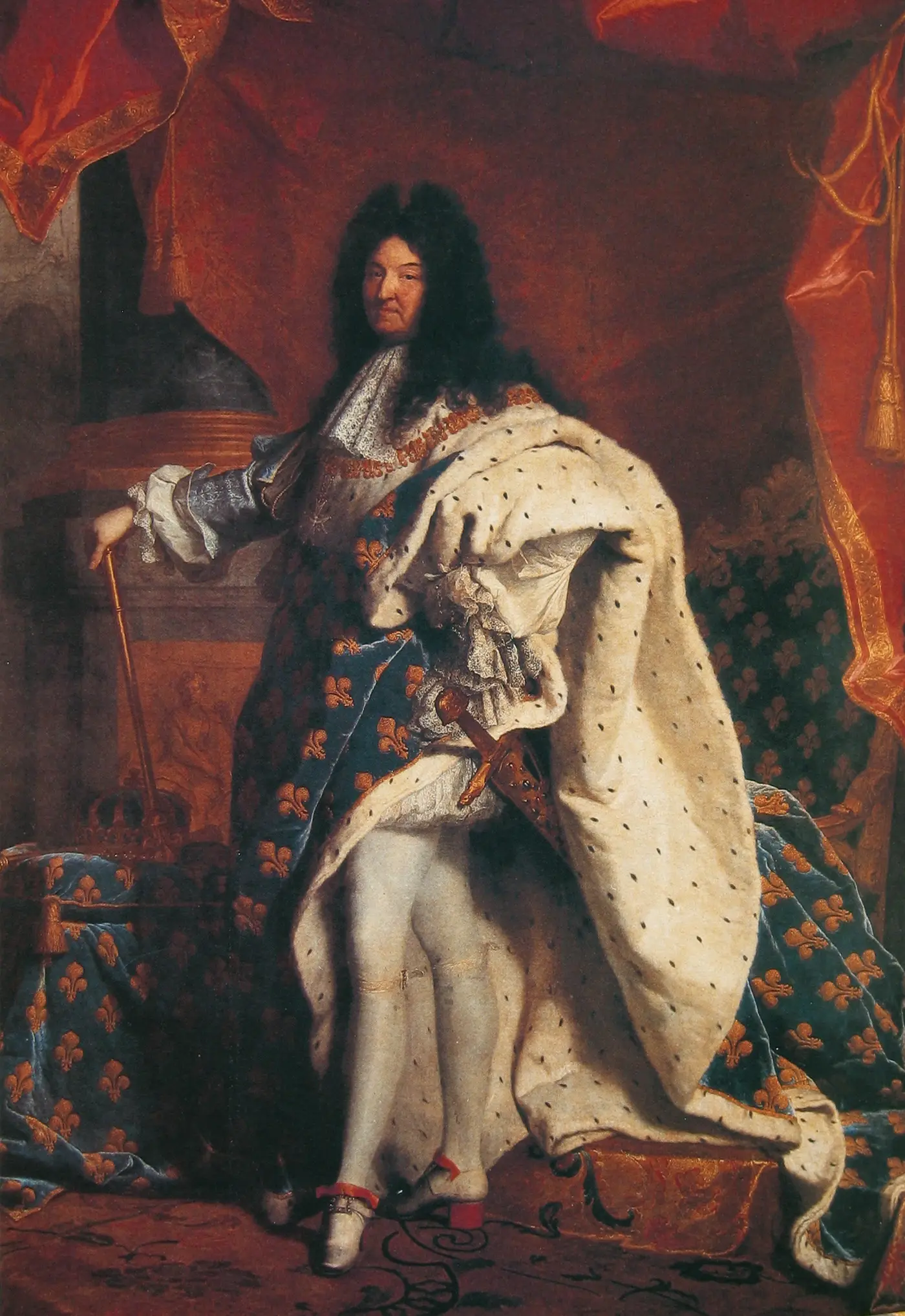
Before high heels belonged to women, they belonged to soldiers. Then to kings. For more than a century, the most powerful men in Europe wouldn’t be caught in public without them: red, about four inches high, sometimes painted with battle scenes. Louis XIV of France didn’t wear heels in spite of being a man. He wore them because, at the time, nothing said “man” quite like a heel. It came from the cavalry, it smelled of war, and it announced that its wearer never had to walk very far.
The fact that men once wore heels has become a fun bit of trivia. The better story is why they stopped, and who ended up keeping the heel.
Built for the stirrup
The heel wasn’t invented for walking. It was invented for riding. “The high heel was worn for centuries throughout the near east as a form of riding footwear,” Elizabeth Semmelhack, senior curator at Toronto’s Bata Shoe Museum, told the BBC in 2013. Persian armies fought on horseback with bows. “When the soldier stood up in his stirrups, the heel helped him to secure his stance so that he could shoot his bow and arrow more effectively,” she explained. The heel worked as a stop, keeping the foot from sliding forward through the stirrup.
The earliest image usually cited is on a ceramic dish excavated at Nishapur, in today’s Iran, from the Samanid Empire, which ruled from 874 to 1005. It shows a soldier in an early heeled riding boot, according to a history of men’s heels published by Google Arts & Culture. By the 17th century, one-inch heels were standard for Persian riders on and off their horses. Owning horses was a sign of wealth, so the heel came to stand for something beyond good posture in the saddle: money and power. The BBC illustrated its story with a 17th-century Persian man’s shoe covered in shagreen, horsehide pressed with mustard seeds to give it a pebbled texture. Luxury riding gear, made to be seen.
Persia-mania
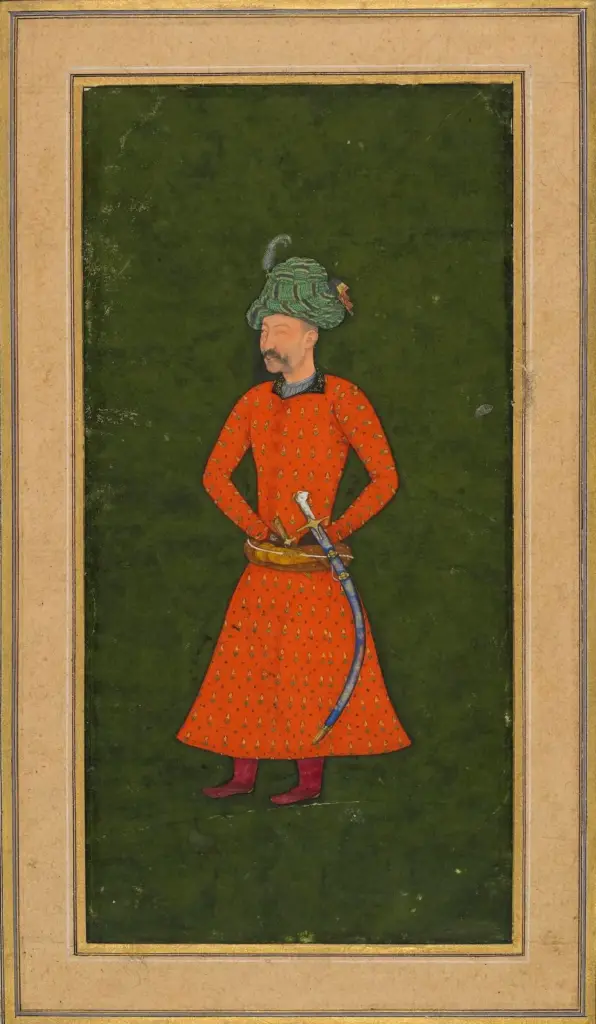
At the end of the 16th century, Shah Abbas I of Persia had, according to the BBC, the largest cavalry in the world, and he wanted allies in Western Europe against his great rival, the Ottoman Empire. In 1599 he sent the first Persian diplomatic mission to Europe, which called on the courts of Russia, Germany and Spain. In its wake came a craze for all things Persian.
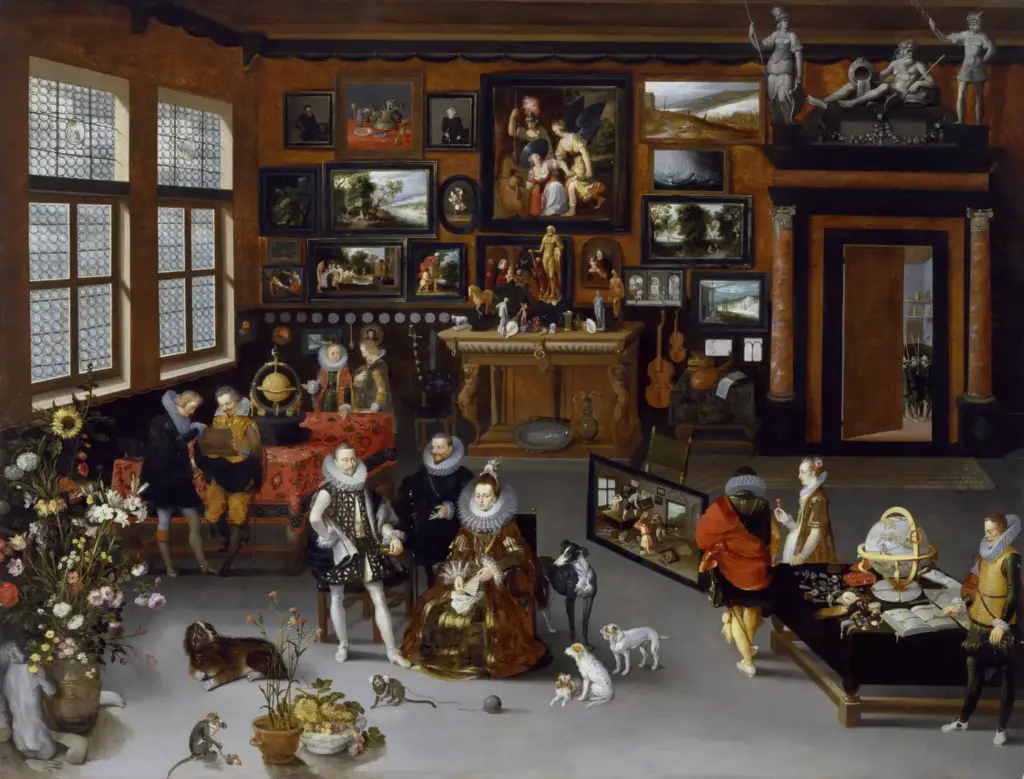
European aristocrats took up heeled shoes with enthusiasm. In Semmelhack’s account, they wanted to give their look a virile, masculine edge that, suddenly, only heels seemed to deliver. Seventeenth-century men’s fashion was all about the legs: tight stockings, puffed breeches and, at the bottom, the heel. In portraits of the period, men pose to show off their calves and shoes. Google Arts & Culture points to a painting of Archduke Albert, who governed the Habsburg Netherlands with his wife Isabella, a daughter of Philip II of Spain, as a classic example: standing in a collector’s gallery, legs on display, heels and all.
As heels trickled down the social ladder, the aristocracy simply raised them. On the muddy, rutted streets of 17th-century Europe, a tall heel had no practical use at all, and that was the point. “One of the best ways that status can be conveyed is through impracticality,” Semmelhack says. If your shoes make it impossible to work a field or walk across town, you’re telling everyone you’ll never have to. Or, as Semmelhack put it: “They aren’t in the fields working and they don’t have to walk far.”
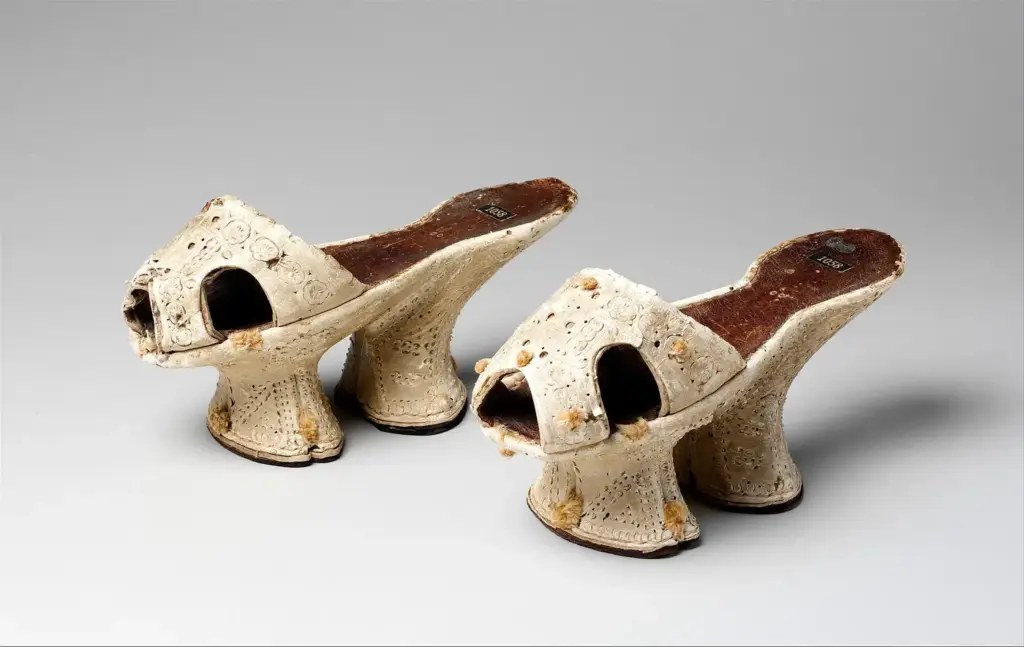
There was already a tall shoe on European streets, but it belonged to women. Venetian chopines, and their Spanish cousins called chapines, lifted the whole foot on thick platforms, sometimes cork, sometimes many inches high. In Spain, chapines were a serious business: according to the University of Murcia’s dictionary of medieval trade, workshops in Valencia were especially prized, and as early as 1317 King James II of Aragon was recommending chapines to his daughter. The Persian import was a different animal: a block under the heel only, born in war and masculine from the start.
The 5-foot-4 Sun King
If one man personifies the male high heel, it’s Louis XIV. According to the BBC, the French king stood about 5 feet 4 inches and added roughly four inches with his heels, which were often decorated with miniature battle scenes. Heels and soles were always red: the dye was expensive and the color carried a martial overtone.
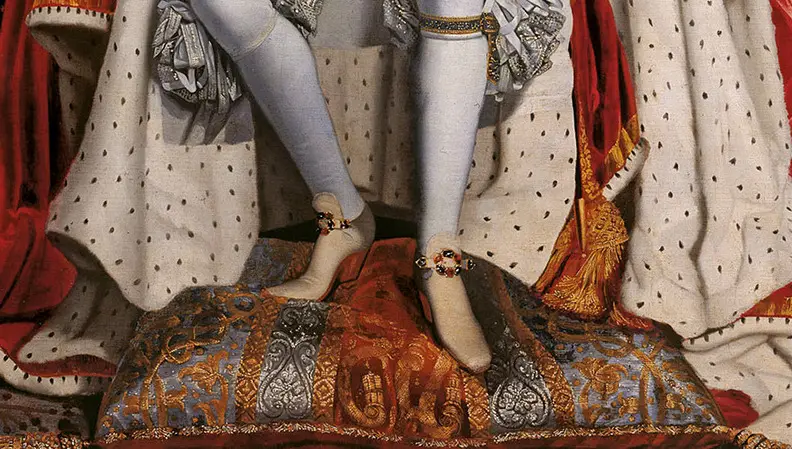
In the 1670s, Louis issued an edict that only members of his court could wear red heels. In theory, all you had to do to see who was in the king’s favor was look down. In practice, knockoffs were available. Google Arts & Culture sums up the logic of Louis’s court: the higher and redder the heel, the more powerful the wearer. The red heel showed that you were rich enough not to dirty your shoes and powerful enough to crush your enemies underfoot. The fashion crossed the Channel, too. In his 1661 coronation portrait, Charles II of England wears enormous red, French-style heels, even though, the BBC notes, he was already over six feet tall.
The most famous image of Louis, painted by Hyacinthe Rigaud in 1701 when the king was 63, shows him in an ermine-lined robe and a towering wig, with his red-heeled shoes front and center. One version hangs in the Louvre today.
What changed, part one: women borrowed the look
The first twist came from an unexpected direction. “In the 1630s you had women cutting their hair, adding epaulettes to their outfits,” Semmelhack says. “They would smoke pipes, they would wear hats that were very masculine. And this is why women adopted the heel. It was in an effort to masculinise their outfits.”
For a few decades, Europe’s upper classes wore something close to unisex shoes. Then, toward the end of the 17th century, heels started to split by gender. Helen Persson, a curator at London’s Victoria and Albert Museum, told the BBC that men moved to a squarer, sturdier, lower, stacked heel, while women’s heels became more slender and curvy. Women’s toes were tapered so that the tip peeking out from under a skirt made the foot look small. Through the 18th century, men’s shoes grew broader and sturdier and women’s narrower and more ornamental. You can see the gap opening in a 1730 painting by the English artist William Hogarth: the young man still wears a small heel, but it’s already lower than the woman’s, and his shoe is broader and plainer.
Part two: the Age of Reason
The second blow was intellectual. The Enlightenment brought a new respect for the rational and the useful, and an emphasis on education over privilege. Men’s clothing turned practical. In England, aristocrats started wearing simpler clothes tied to the work of running their country estates. It was the start of what British psychologist John Flügel would later call, in 1930, the Great Masculine Renunciation: men gave up jewelry, bright colors, showy fabrics and, along with them, the heel.
Semmelhack describes the logic underneath with a bluntness worth quoting in full. A conversation began about how men, whatever their birth, could become citizens if they were educated. “Women, in contrast, were seen as emotional, sentimental and uneducatable. Female desirability begins to be constructed in terms of irrational fashion and the high heel, once separated from its original function of horseback riding, becomes a primary example of impractical dress.”
Heels came to be seen as foolish and effeminate. By 1740, according to the BBC, men had stopped wearing them altogether. Google Arts & Culture puts the date around 1730, as a reaction against that perceived feminization.
Part three: the Revolution
The French Revolution of 1789 finished off the heel as an aristocratic symbol, and not just for men. Only about 50 years after men gave them up, the BBC notes, heels disappeared from women’s feet too. When they came back in the mid-19th century, it was as a women’s item only, and that’s the meaning they’ve carried ever since.
It’s a full reversal. The heel started as a tool of war, became a symbol of male power, was adopted by women to look more masculine, and ended up branded as the height of feminine impracticality. The only thing that never changed was the object itself.
The men who never got off their heels
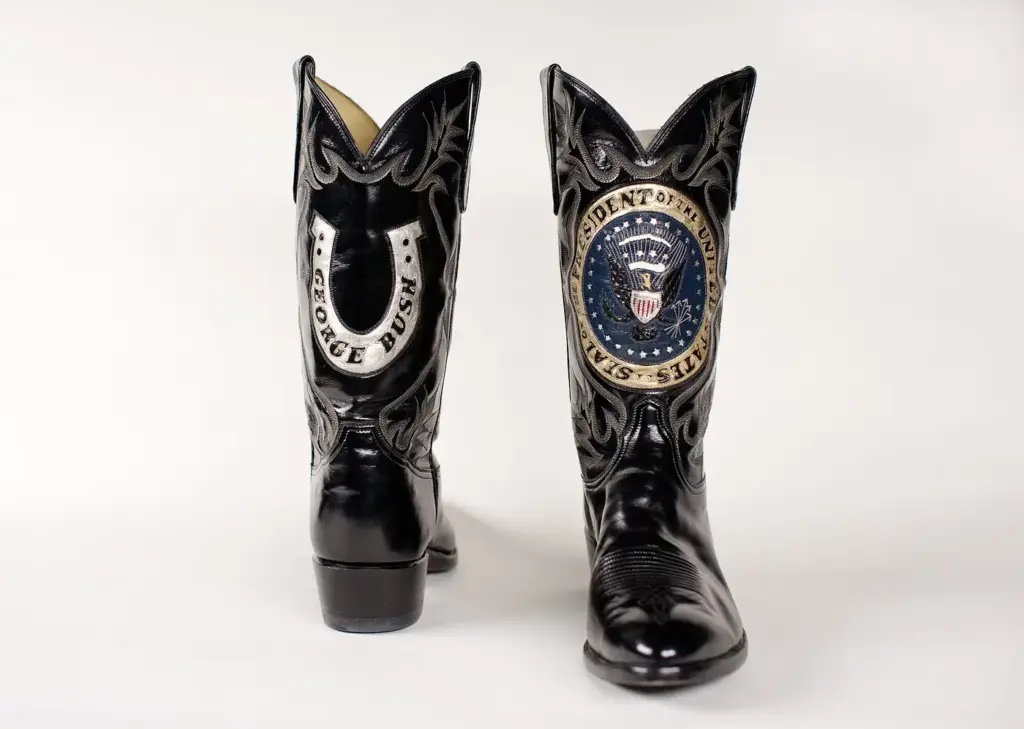
Some men never fully stepped down. Cowboys, for starters. The cowboy boot, with its angled heel made to catch the stirrup, is a direct descendant of that Persian riding boot, according to Google Arts & Culture, and nobody has ever called it unmanly. One pair, made by Tony Lama, was even presented to a president in the Oval Office. That angled heel is also known as a Cuban heel, and in the 1960s the Beatles made it famous with their “Beatle boots,” a take on the Chelsea boot: snug, ankle-high, with a sharp pointed toe and a Cuban heel. As the story goes, in October 1961 John Lennon and Paul McCartney spotted a pair they liked at a shop in London’s Chelsea and ordered four pairs with Cuban heels to match their new image. The 1970s brought platform shoes, and David Bowie wore everything from platforms to stilettos as he cycled through alter egos like Ziggy Stardust and the Thin White Duke. By the 1990s, the Cuban heel had settled into a rough rock-and-roll look, on stage with bands like Mötley Crüe and with Prince.
The Bata Shoe Museum devoted a full exhibition to all of this, “Standing Tall: A Curious History of Men in Heels,” which ran from May 2015 to May 2016 to mark the museum’s 20th anniversary. According to World Footwear, it brought together 17th- and 18th-century men’s heels, mid-19th-century military boots, 1930s cowboy boots, 1940s biker boots, John Lennon’s original Beatle boots and Elton John’s 1970s platforms. “When heels were introduced into fashion at the turn of the 17th century, men were the first to adopt them and they continued wearing heels as expressions of power and prestige for over 130 years,” Semmelhack said. She’s also the author of Heights of Fashion: A History of the Elevated Shoe.
She doesn’t think the story is over. Asked whether men could ever go back to heels, she told the BBC: “Absolutely.” With one condition: “If it becomes a signifier of actual power, then men will be as willing to wear it as women.”
A heel, after all, is just a wedge under the back of the foot, the same thing running shoe makers now measure in millimeters and call drop, as we explain in our story on heel-to-toe drop. What has changed over the centuries isn’t the wedge. It’s who gets permission to wear it.
Sources
- William Kremer (January 25, 2013), “Why did men stop wearing high heels?,” BBC News, with Elizabeth Semmelhack (Bata Shoe Museum) and Helen Persson (Victoria and Albert Museum).
- Maude Bass-Krueger, “The high-life: a history of men in heels,” Google Arts & Culture.
- World Footwear (2015), “New exhibition dedicated to heeled footwear in men’s fashion.”
- University of Murcia, Vocabulario del comercio medieval (Gual Camarena legacy), “chapines.”
- Wikipedia, “Great Male Renunciation,” and its references to J. C. Flügel, The Psychology of Clothes (1930).
Image credits
- Louis XIV, by Hyacinthe Rigaud (1701). Public domain, via Wikimedia Commons.
- Shah Abbas I, attributed to Bishn Das. Public domain, via Wikimedia Commons.
- The Archdukes Albert and Isabella Visiting a Collector’s Cabinet, by Jan Brueghel the Elder and Hieronymus Francken II. Public domain, via Wikimedia Commons.
- Venetian chopines, Metropolitan Museum of Art. Public domain (CC0), via Wikimedia Commons.
- Charles II of England, by John Michael Wright (detail). Public domain, via Wikimedia Commons.
- Tony Lama cowboy boots for George H. W. Bush, U.S. National Archives. Public domain, via Wikimedia Commons.