
Socks might be the most thoughtlessly purchased thing in your closet. Grab a six-pack, check the size, done. But between your skin and your shoe there are a few millimeters of fabric that decide whether sweat stays stuck to your foot, gets pulled outward or soaks into the fiber. And that mostly comes down to one line on the label: fiber content.
Cotton, merino wool, polyester, nylon, polypropylene, spandex. Each fiber handles water and heat differently, not because of marketing but because of its chemistry and structure. Once you understand those differences, you stop overpaying for socks that don’t do much and underpaying for socks that can’t handle what you’re asking of them.
Two ways to deal with sweat
When your feet sweat, that water has three possible destinations: it stays on your skin, it gets absorbed into the fiber, or it travels through the fabric to evaporate on the outside. According to a 2023 scientific review in the journal Textiles, fibers manage moisture in two fundamentally different ways.
The first is absorption. Hygroscopic fibers like cotton and wool pull water vapor into their own structure. How much they can take in depends largely on crystallinity, meaning how tightly packed and ordered their molecules are: the more crystalline a fiber, the less moisture it absorbs. The second is capillary transport, or wicking. Liquid water doesn’t enter the fiber at all. It travels through the gaps between fibers and yarns, the same way coffee creeps up a sugar cube.
There’s a bit of physics most people never hear about. When a fiber absorbs moisture, it releases a small amount of heat, called the heat of sorption. The review cites an experiment with two-layer fabrics of cotton and polyester: when the layer against the skin was made of a moisture-absorbing fiber, its inner surface ran warmer than when it was made of a fiber that doesn’t absorb moisture, precisely because of that released heat.
Cotton: soaks it up, holds on
Cotton is a cellulose fiber loaded with chemical groups that attract water, which is why it absorbs so well. According to the same review, studies have found that cotton reduces the damp feeling people notice, precisely because it holds onto the water. The catch comes later: cotton is poor at moving moisture outward, which means it takes a long time to dry.
In an everyday sock, that barely matters. In a sock for hours of hiking or running, it does. Wet cotton stays wet. The review adds another wrinkle: cotton’s highly crystalline structure makes it a good heat conductor, better than polyester. It also cites a study on how damp different fabrics feel, using cotton, wool, polyester and a wool-cotton blend: in dry air, the more hygroscopic the fiber, the less damp it felt, but the difference between fibers shrank as the air got more humid.

Merino wool: a breed with a Spanish passport
Merino has a back story most runners have never heard. According to Encyclopaedia Britannica, the merino is a fine-wool sheep breed that originated in Spain, known as early as the 12th century and possibly brought in by the Moors, and particularly well suited to semiarid climates and to moving flocks between seasonal pastures. According to Wikipedia, drawing on its sources, it stayed a Spanish monopoly for centuries, protected by export bans, until the late 18th century, when it spread through Europe and from there to South Africa, Australia and New Zealand.
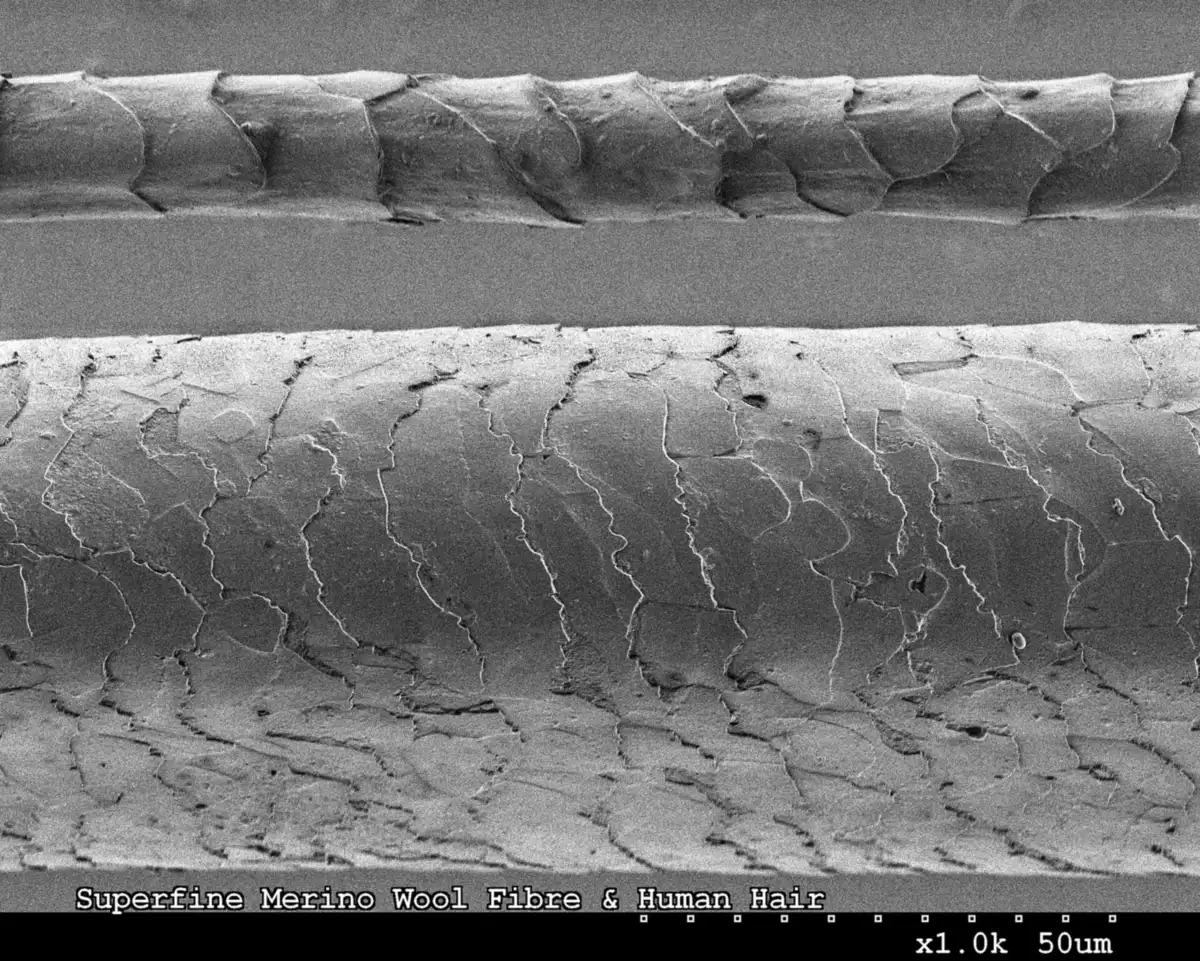
Wool is made mostly of keratin, a protein. Britannica puts wool fiber diameters at roughly 16 to 40 microns and notes that fine wools are heavily crimped, with up to 30 waves per inch. Merino ranks among the finest. Fine-wool fibers run about 1.5 to 3 inches long, and the grease washed out of the fleece is purified into lanolin.
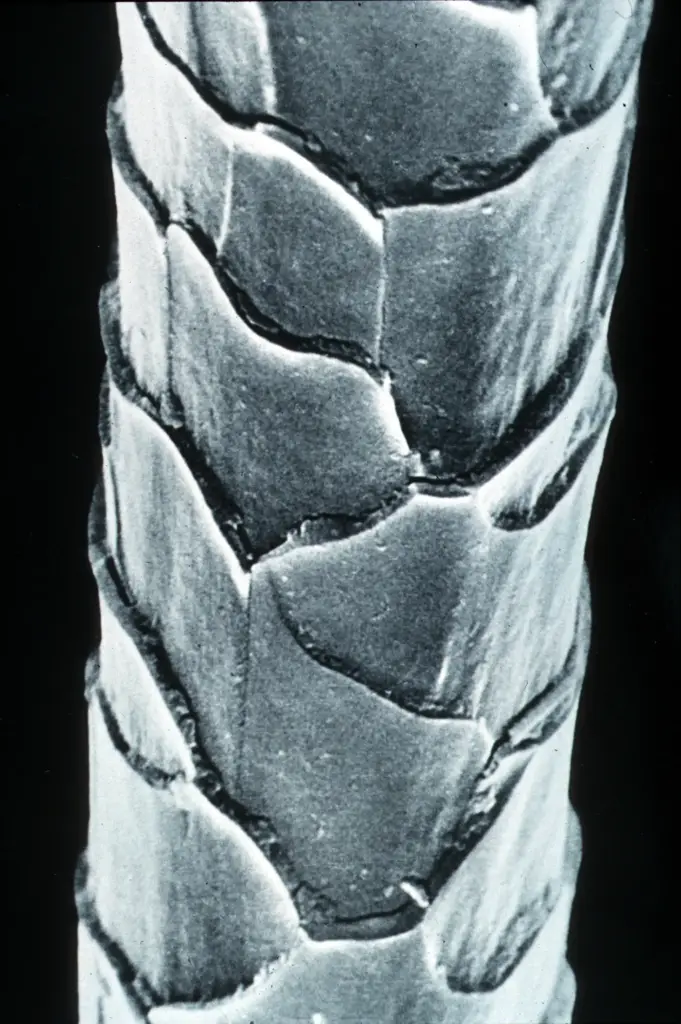
The 2023 review explains why wool behaves the way it does. The outermost layer of the fiber has microscopic pores that work as channels for water vapor, so wool absorbs vapor easily. But its surface repels liquid droplets and is slow to take them in, which is why wool fabrics dry slowly. Its scaly surface and natural crimp trap air, giving the fabric loft and insulation. One study cited in the review compared fabrics made of merino, silk and bamboo in different structures: the merino fabrics had higher thermal resistance and let more water vapor through, thanks to that loft.

Why wool itches, and why merino itches less
Wool’s itchy reputation has a specific explanation, which researcher Garth Naylor and colleagues have studied for years in the Textile Research Journal. The prickle comes from the thickest fibers in the mix. Their ends stick out of the fabric surface and press on the skin hard enough to trigger particular nerve endings that sit close to the surface.
That’s why diameter matters so much. The finer the wool, the fewer thick ends it has and the less the fabric prickles. In a 2014 study with real garments, Naylor also found that wearers will accept a low level of prickle without it changing their overall opinion of a garment, as long as it stays under a certain threshold. Merino’s fine fibers make it easier to stay below that line than coarse wool.
Synthetics: they don’t absorb, they move
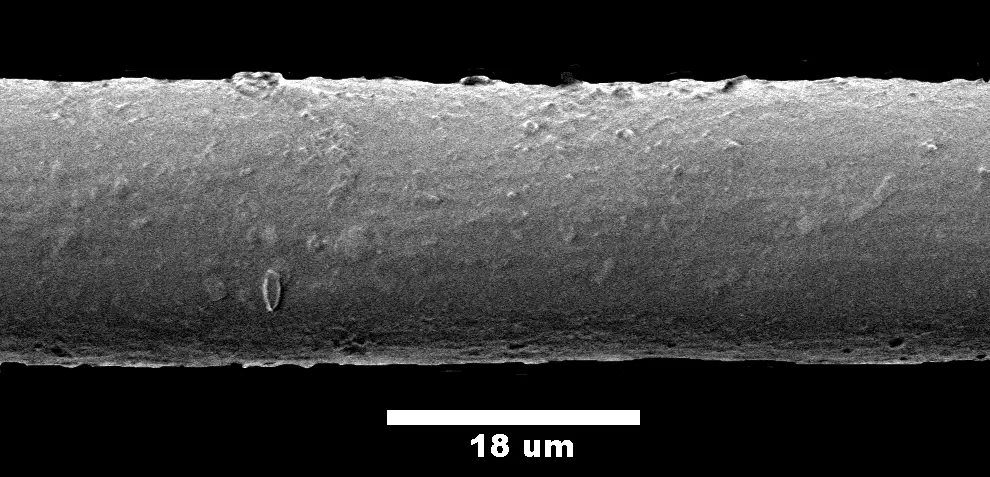
Polyester is hydrophobic: it barely absorbs water at all. According to the 2023 review, that very inability to absorb can help liquid water travel through the fabric. But how well it moves depends heavily on the yarn, the knit and the finish, not just the fiber. That’s why there are polyester fibers with modified cross-sections, grooved like channels along their length, engineered specifically to pull water by capillary action, sold under trade names such as Coolmax and Octa.
The review also notes the flip side. Because polyester doesn’t absorb moisture, it doesn’t release heat of sorption, and any water it fails to move stays on the skin, which people perceive as uncomfortable. Nylon, invented in the 1930s as a synthetic alternative to silk, does have chemical groups that attract water and absorbs more moisture than polyester. The review cites a study of woven cotton-nylon fabrics in which wicking improved as the share of nylon in the blend went up.
Odor: a lab surprise
There’s one more factor nobody prints on the label: smell. In 2007, a team of researchers published a study of odor in fabrics in the Textile Research Journal, testing cotton, wool and polyester in different knit structures. These weren’t socks. They were shirt fabrics worn against the armpit. But the results are worth knowing. Odor depended strongly on fiber type: polyester fabrics scored high in odor intensity, while cotton and wool scored medium to low.
The interesting part is that bacteria counts didn’t explain it. After one day, counts were similar across all the fabrics, and on polyester the bacteria actually declined faster. The link between fiber and odor wasn’t about how many bacteria were present but about something in the fiber itself. Knit structure mattered too: among the polyester fabrics, the light single jersey smelled less than the heavier knits. And on wool, the group of bacteria associated with odor stayed essentially unchanged for 28 days. It’s a reasonable hint for socks, with the caveat that the study didn’t test socks.
The test with real socks
So what happens when you test actual socks? In 2017, researchers at the Technical University of Liberec in the Czech Republic presented a test of nine commercial socks at the AUTEX World Textile Conference. The authors grouped them into three series. In their introduction, they summed up what earlier research had found: fiber type, yarn properties, fabric structure, finishing treatments and wearing conditions are the main factors behind how comfortable a sock feels. Three were made of a single fiber or nearly so: 100 percent cotton, 100 percent polypropylene, and polyester with 2 percent spandex. Three were everyday blends heavy on cotton. And three were athletic socks made with performance fibers, including one that was 75 percent merino wool.
Seven people pedaled a stationary bike for half an hour in each sock, in a room held at about 70°F and 55 percent humidity, and rated how their feet felt before, during and after. The socks were weighed to see how much sweat they held, and the fabrics were analyzed with an instrument that measures how liquid moves through them: how fast each side absorbs, how well moisture travels one way from the inner face to the outer face, and how quickly it spreads and dries. A second instrument measured thermal conductivity with the socks both dry and dampened with synthetic sweat. Every sock was conditioned for 24 hours before testing.
The 100 percent cotton sock was rated the worst of the bunch: participants said it adapted very poorly to the shape of the foot and dried very poorly during and after exercise. It also held the most sweat in its group, 1.24 grams versus 0.39 for the polypropylene sock. The merino-blend athletic sock held 0.75 grams. The heaviest sweat load of all, 3.11 grams, went to a thick, padded winter hiking sock designed for warmth, which makes sense: it wasn’t built for half an hour on a bike in a warm room. The top-rated sock was a blend of channeled polyester, cotton, polypropylene, nylon and spandex: participants noticed little moisture and reported an optimal feeling of comfort afterward. The researchers concluded that the lab measurements matched what people felt.
With seven people and nine socks, this doesn’t settle anything. But it illustrates what the labels already tell you: almost no performance sock is made of a single fiber. They’re blends trying to combine the best of each.
Reading the label
With all that in mind, the label reads differently. Lots of cotton means a sock that absorbs well, feels nice when you’re sitting still and, once soaked, takes its time drying. Lots of merino means a fiber that absorbs vapor, insulates with its crimp, dries slowly and itches less the finer it is. Lots of polyester or polypropylene points to a sock that won’t hold water and relies on its construction to move it outward. And spandex, present in almost every blend in the Czech test, is added in small amounts so the sock fits snugly.
No fiber wins at everything. The useful question isn’t which is best, but what you’ll be doing with the sock on: sitting in an office, walking a city in July or running a muddy trail. The answer changes the ideal blend, and it’s worth choosing it together with your shoes, as we explain in our story on why shoes feel tighter in the afternoon: a thick sock and a thin one take up very different amounts of room inside a shoe.
Sources
- M. R. Islam, K. B. Golovin and P. I. Dolez (2023), “Clothing thermophysiological comfort: a textile science perspective,” Textiles 3(4).
- Encyclopaedia Britannica, “Merino” and “wool.”
- G. R. S. Naylor (2009), “Fabric-evoked prickle in worsted spun single jersey fabrics,” and G. R. S. Naylor, J. H. Stanton and J. Speijers (2014), “Skin comfort of base layer wool garments. Part 2: fiber diameter effects on fabric and garment prickle,” Textile Research Journal.
- R. H. McQueen, R. M. Laing, H. J. L. Brooks and B. E. Niven (2007), “Odor intensity in apparel fabrics and the link with bacterial populations,” Textile Research Journal.
- P. Komárková, V. Glombíková and A. Havelka (2017), “Heat and moisture transport of socks,” IOP Conference Series: Materials Science and Engineering 254: 182004.
- Wikipedia, “Merino,” and the references it cites, on export restrictions.
Image credits
- Merino wool fiber next to a human hair, electron microscope: CSIRO. CC BY 3.0, via Wikimedia Commons.
- Cotton boll: Alabama Extension. Public domain (CC0), via Wikimedia Commons.
- Merino sheep: Bernard Spragg. Public domain, via Wikimedia Commons.
- Merino wool fiber, electron microscope: CSIRO. CC BY 3.0, via Wikimedia Commons.
- Polyester fiber, electron microscope: CSIRO. CC BY 3.0, via Wikimedia Commons.
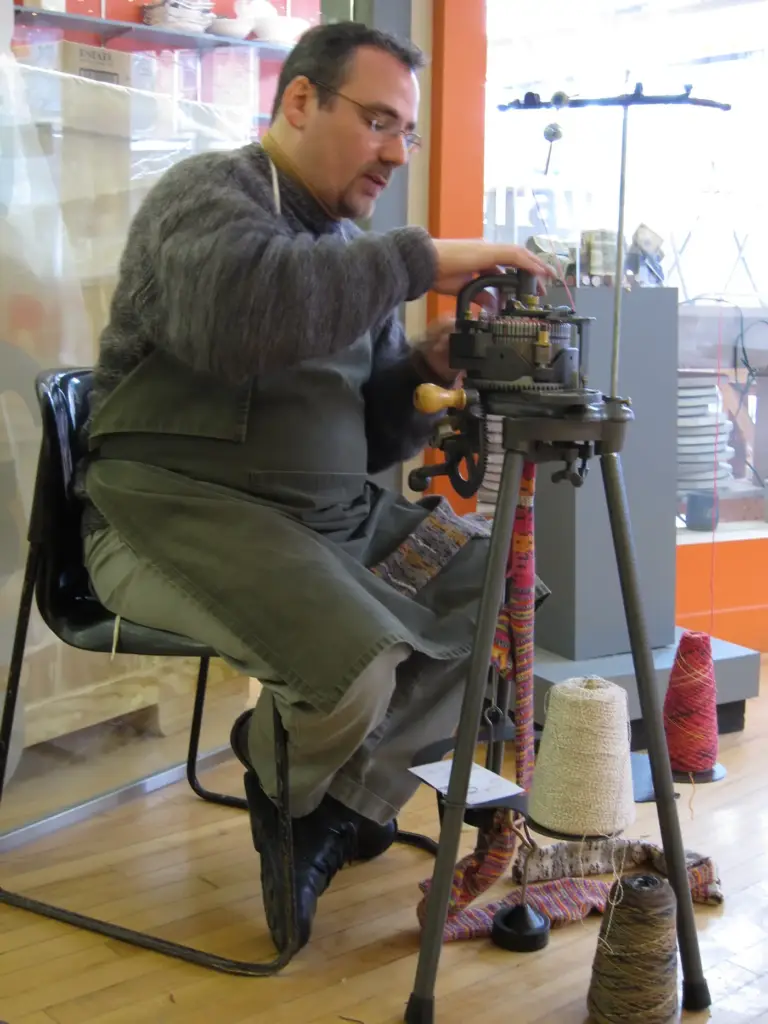
- Sock knitting machine: jhritz. CC BY 2.0, via Wikimedia Commons.