
Why do fingers wrinkle in water? Almost everyone thinks they know, and almost everyone has it wrong. Your skin doesn’t prune up because it soaks up water like a sponge. It wrinkles because your nervous system tells it to. It’s an active process, involving nerves and blood vessels, and it only happens on the hairless skin of your hands and feet. There’s also a lively scientific argument still going on about whether those wrinkles are good for anything or just a side effect. If you like to end the day with a foot soak, it’s a fun question: what you see on your toes isn’t skin giving in to the water, it’s your body responding to it.
The explanation that wasn’t
The common explanation is that water seeps into the outer layer of skin, which swells and, with nowhere else to go, buckles. A team led by M. Changizi summed that up in 2011, in the journal Brain, Behavior and Evolution, as the lay view: a local osmotic reaction. Then they pointed to the fact that sinks it. Nearly a century ago, surgeons noticed that a finger whose nerve had been cut didn’t wrinkle in water. If it were just a matter of soggy skin, the nerve shouldn’t matter.
A 2005 study in the Journal of Hand Surgery backed that up from another angle. N. Tsai and S. Kirkham of Westmead Hospital in Sydney submerged the 28 hands of 14 healthy volunteers in solutions of different concentrations, keeping everything else the same. The more concentrated the solution, the longer the wrinkles took to show up. Plain tap water, with very little dissolved in it, wrinkles fingers fastest. According to the review that opens a 2014 study we’ll get to below, water temperature, acidity and concentration all affect wrinkling.
A signal from your nerves
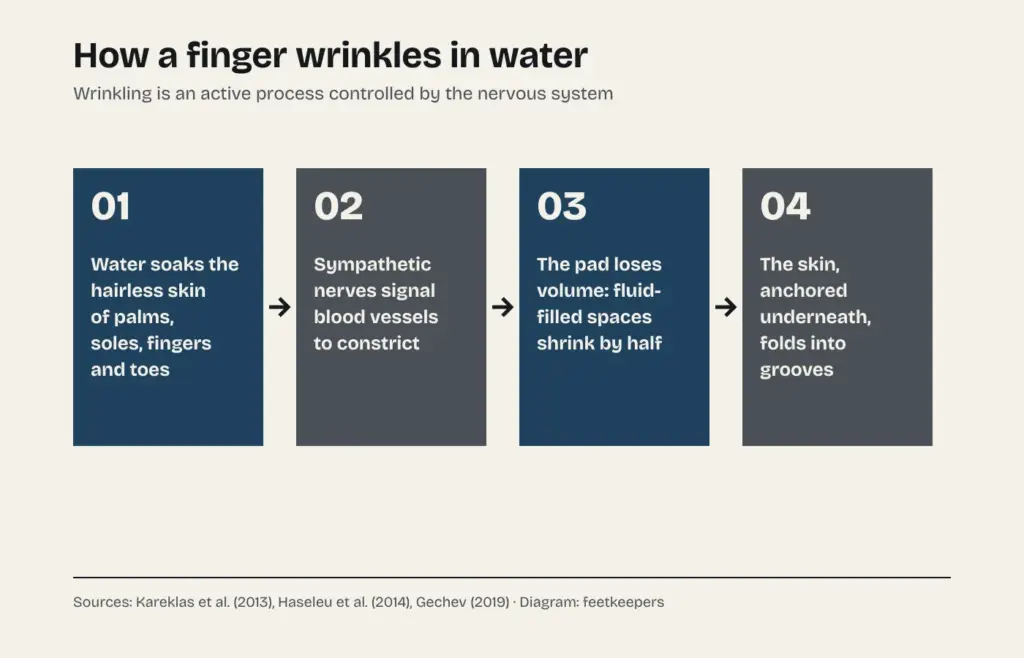
Today we know wrinkling depends on the sympathetic nervous system, the part of the nervous system that runs without our deciding, the same part that controls sweating and the width of your blood vessels. When the skin on your fingertips has been in water for a while, those nerves signal the tiny blood vessels underneath to constrict. With less blood, the fingertip loses volume. And because the surface skin is anchored to the layers below, it can’t simply shrink. It folds.
In 2019, neurophysiologist Antonin Gechev of London’s Royal Free Hospital looked inside with ultrasound scans of the tips of fingers and toes, published in Scientific Reports. Before and after wrinkling, he measured fluid-filled spaces in the pad of the last bone of each digit, between the connective tissue walls that hold it up. After soaking, those spaces shrank to about half their area. The pad empties out on the inside, and the skin wrinkles on the outside.
Gechev’s numbers are precise. Before soaking, those dark spaces on the ultrasound took up about 12.9 percent of the soft tissue area of the last bone of the finger or toe; afterward, about 6.6 percent. The overall size of the pad barely changed, and neither did the denser walls that support it: what moved was the fluid between them. The walls, like pillars, pulled back and drew toward the middle, and the spaces between them flattened right beneath the grooves in the skin. Gechev even ruled out another possible explanation, the fat in the pad, which shifts from solid to liquid at around 95°F: if that were the cause, warm water shouldn’t make the pad lose volume. One more detail from the scans: after soaking, the Doppler signal, which picks up blood flow, actually grew stronger inside those denser walls, a reminder that what’s going on is a rearrangement of fluid and blood within the pad, not the skin simply drying out or soaking up water.
Only on hairless skin
Wrinkles show up on the palms, the soles and the fingers and toes, and not on the back of the hand or the top of the foot. This is what’s called glabrous skin, the skin without hair. According to a 2013 hypothesis by E. P. Wilder-Smith, the difference comes down to anatomy: the skin of palms and soles is highly porous to water, has a specialized network of blood vessels densely supplied with sympathetic nerves, and is anchored in a distinctive way that’s built for gripping.
It’s also the skin with the most sweat glands in the body. According to a 2013 review by physiologists Nigel Taylor and Christiano Machado-Moreira, the sole of the foot averages about 294 glands per square centimeter, more than the palm of the hand, as we explain in our story on how many pairs of shoes you need. In that sense, hands and feet are very special patches of skin, made for contact, moisture and grip.
That abundance of glands may have something to do with wrinkling. As the introduction to the 2014 Berlin study notes, other researchers have proposed that water gets into the skin through the sweat ducts, throws off the balance of salts in the tissue, and that triggers the nervous signal to constrict the vessels. It’s a hypothesis about the trigger, not a settled fact, but it fits with wrinkles appearing exactly where the ducts are densest.
Your feet do it too
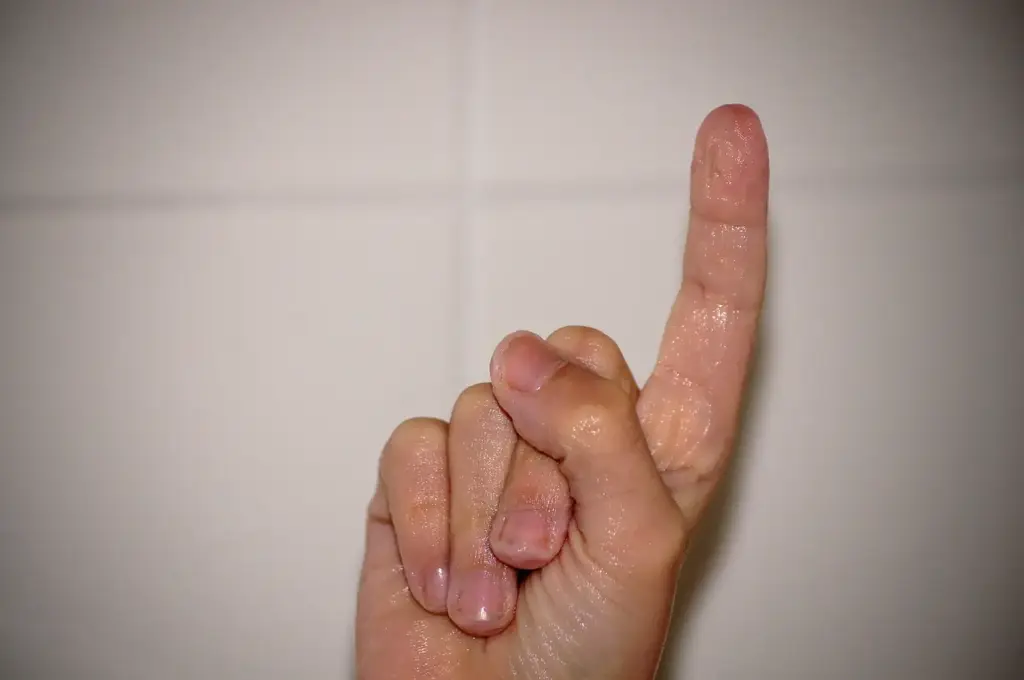
Most studies use hands, purely for convenience: it’s easier to dunk a hand in a tub and then ask someone to move marbles around. But the phenomenon is the same in the feet. The Berlin researchers describe it on the hairless skin of the fingers, palms and soles, and Gechev scanned the tips of both fingers and toes with the same result. If the rain-tread idea is right, it makes sense for feet too: toes that grip better on wet rock.
Rain treads?
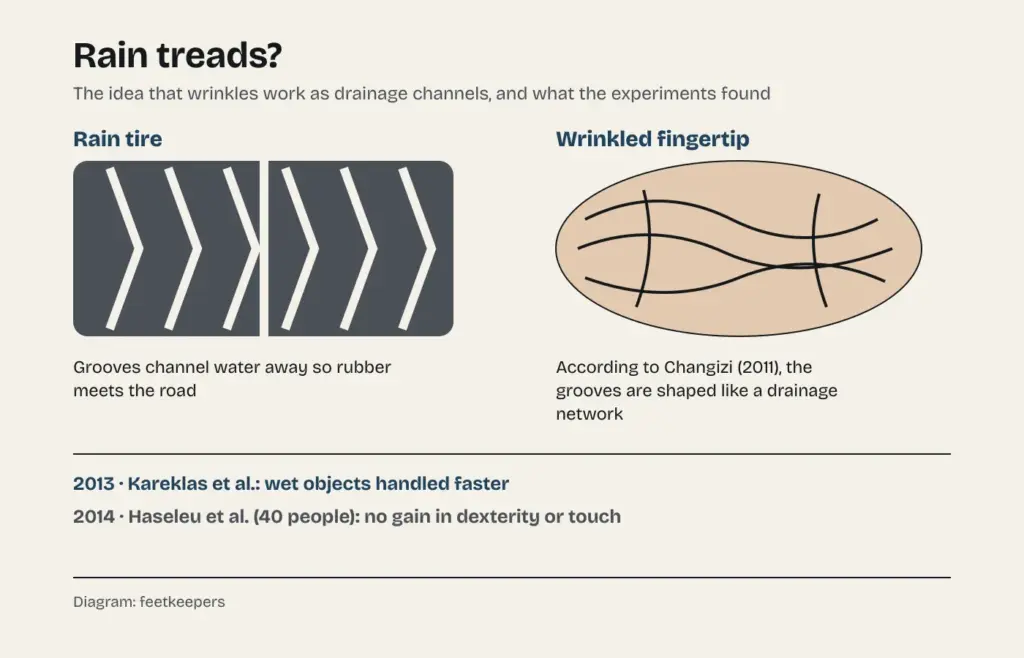
If the body goes to the trouble of actively wrinkling your fingers, it’s natural to think the wrinkles do something. In 2011, Changizi and colleagues offered an appealing answer: wrinkles work like the tread on a rain tire. They analyzed 28 fingers from 13 hands in photographs posted online, compared the grooves with the channels water carves as it runs down a mountainside, and concluded that the wrinkles had the hallmark features of a drainage network, able to channel water away from the surface being gripped. A wrinkled finger, in other words, might grip better when wet, the same way a grooved tire grips a wet road.
The logic behind looking for a purpose was spelled out by the next team to take it on: because wrinkling is an active process controlled by the autonomic nervous system, they wrote, that active control suggests the wrinkles may serve an important function. The idea got tested two years later. In 2013, K. Kareklas, D. Nettle and T. V. Smulders of Newcastle University in England published an experiment in Biology Letters in which people moved objects with wrinkled and unwrinkled fingers. With wrinkled fingers, they moved submerged objects faster; with dry objects, wrinkles made no difference. The authors concluded that the results supported the idea that wrinkles improve the handling of wet objects.
In 2014, a Berlin team with J. Haseleu as lead author ran the test on a larger scale in PLoS One. They wrinkled the fingers of 40 people by soaking both hands in 10 liters of 104°F water for 30 minutes, then asked them to transfer 32 glass marbles, rubber balls, plastic dice and brass weights. They also measured touch sensitivity with two separate tests. Wrinkling didn’t improve dexterity with wet objects and didn’t change any measure of touch. Their conclusion was that the wrinkles didn’t seem to have a significant effect on those tasks.
The Berlin study was carefully designed. The 15 men and 25 women, aged 22 to 35, were split into two groups using two versions of the apparatus, one with the transfer hole set at 75 centimeters, about 30 inches, high. Those who did the wrinkled-finger test first washed and dried their hands and waited 30 minutes for the wrinkles to fade before repeating it without them. The authors also floated another possible explanation, still unproven: that blood vessels constricting in hands and feet soaked in warm water could be a protective mechanism, the mirror image of what finger vessels do when they get cold.
So the question is still open. The mechanism is clear. The purpose, less so.
Same pattern, every time
One last curious detail. In 2025, R. Laytin and G. K. German of Binghamton University in New York published a study on the shape of the wrinkles in the Journal of the Mechanical Behavior of Biomedical Materials. They photographed wrinkled fingertips at two different times, overlaid the images to find matching pairs of wrinkles, turned each wrinkle into a direction and compared how well those directions lined up, against a control set of randomly oriented lines. Their reasoning: if wrinkling depends on blood vessels constricting, and those vessels are always in the same place, the pattern should repeat. It did. The orientation of the wrinkles matched significantly from one time to the next. Each finger has, so to speak, its own wrinkle map. The authors read it as one more sign that the pattern is set by the fixed plumbing underneath, not by the water on top.
The foot soak as a ritual
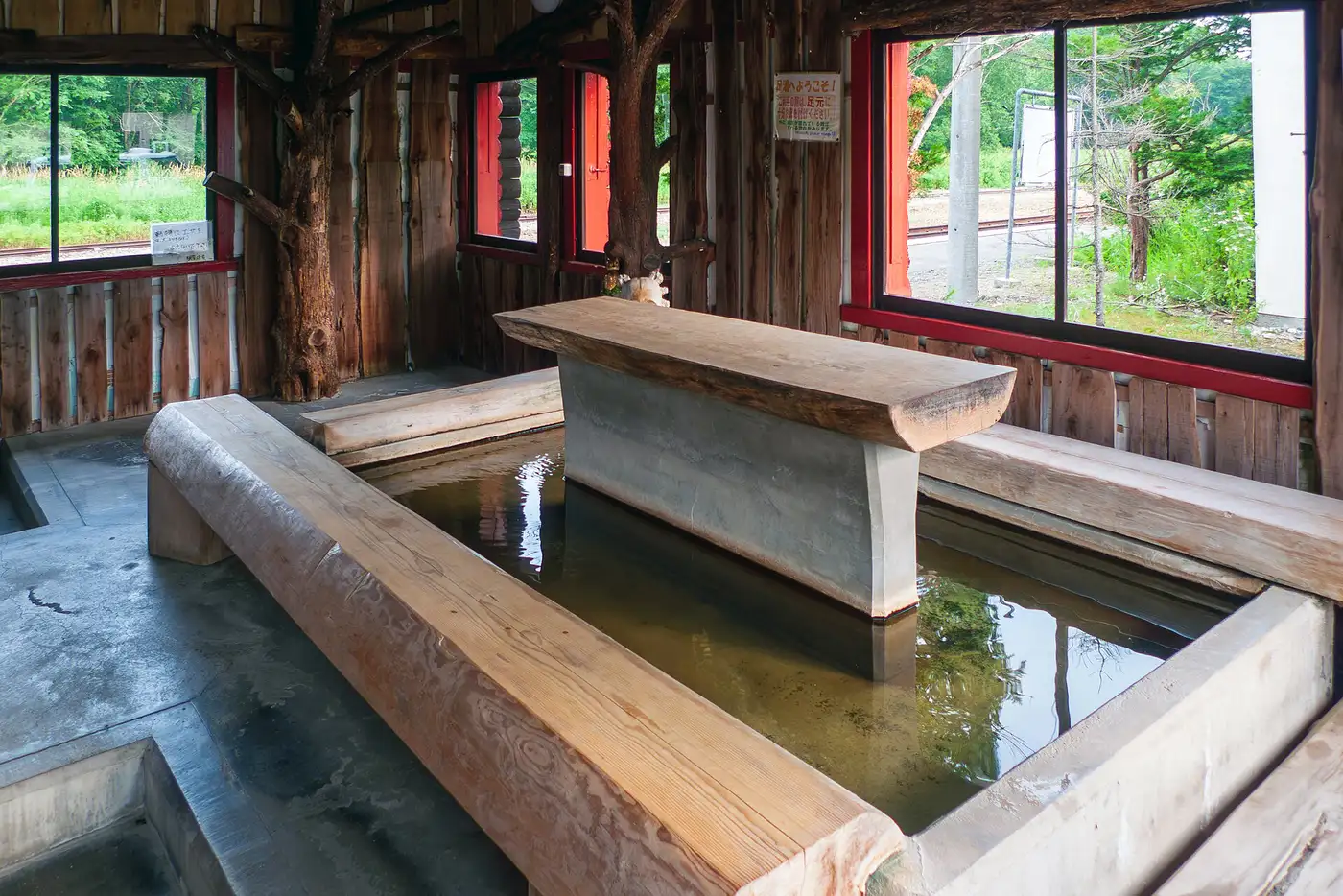
For plenty of people, the place this shows up most isn’t the bathtub but a basin of hot water at the end of the day. In Japan, the foot bath even has its own public architecture. According to Wikipedia, an ashiyu, a word combining the characters for foot and hot water, is a public foot bath, usually free, found on street corners in hot-spring towns and at train stations, rest stops and parks. You soak your feet and legs up to the knees without undressing. Unlike at a hot spring, you don’t have to wash with soap first, and at some private spots a donation of under 100 yen is requested for upkeep. The photo at the top of this story is the one at Kawayu Onsen Station, in the town of Teshikaga on Hokkaido, where travelers can soak their feet in hot-spring water while they wait for the train, sitting on wooden benches around a pool.
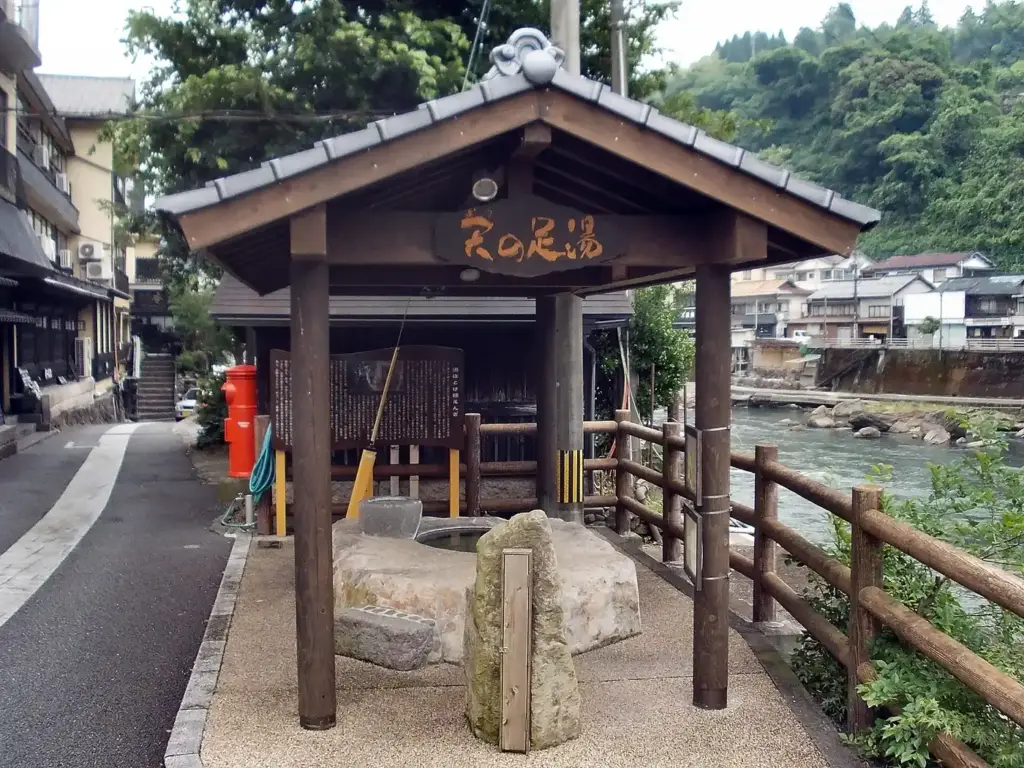
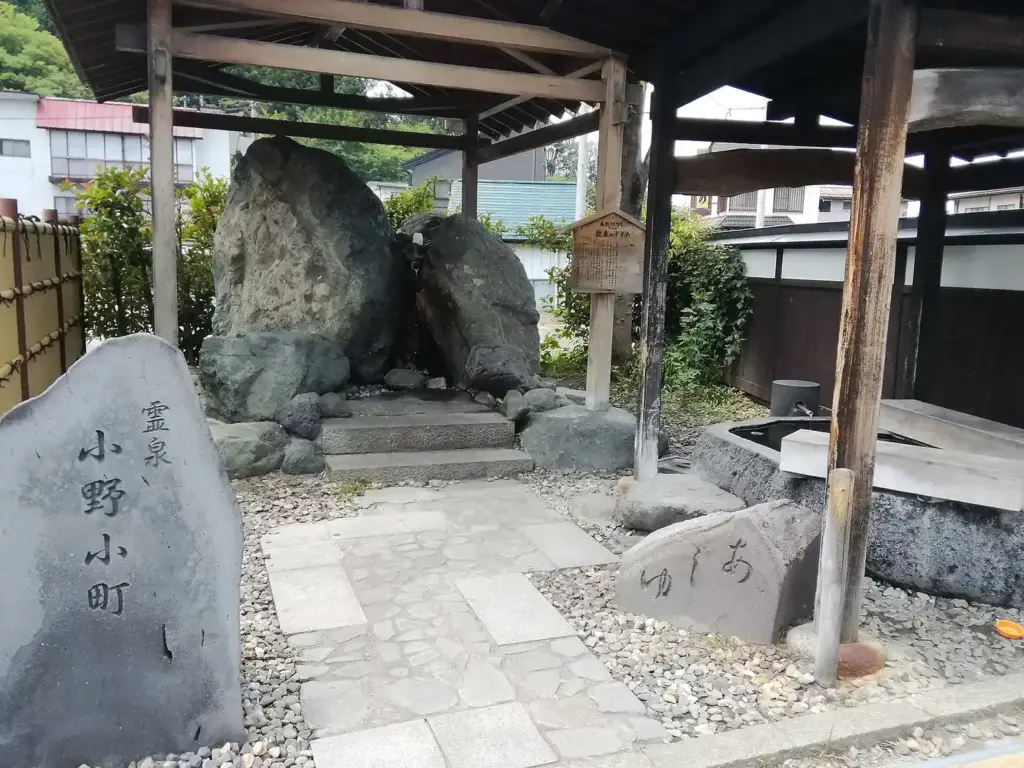
Anyone who pulls their feet out of an ashiyu, or out of a basin at home, and finds their toes wrinkled is seeing exactly what the labs measure: a fingertip or toe that has lost volume inside because its nerves sent a signal. And it doesn’t last: a while after you get out of the water, the pads return to their usual shape. In the Berlin study, drying off and waiting half an hour did the trick.
If the skin on your feet changes in a way that doesn’t go away or worries you, have a podiatrist or physician take a look.
Sources
- M. Changizi, R. Weber, R. Kotecha and J. Palazzo (2011), “Are wet-induced wrinkled fingers primate rain treads?,” Brain, Behavior and Evolution 77(4): 286–290.
- N. Tsai and S. Kirkham (2005), “Fingertip skin wrinkling: the effect of varying tonicity,” Journal of Hand Surgery (British) 30(3): 273–275.
- A. Gechev (2019), “Fluid containing structures in the tips of the fingers and toes delineated by ultrasound imaging before and after induced skin wrinkling,” Scientific Reports 9: 1640.
- E. P. Wilder-Smith (2013), “Aquagenic wrinkling of the palms is due to vasoconstriction of palmar skin vasculature,” Medical Hypotheses 81(5): 963–965.
- N. A. S. Taylor and C. A. Machado-Moreira (2013), Extreme Physiology & Medicine 2: 4.
- K. Kareklas, D. Nettle and T. V. Smulders (2013), “Water-induced finger wrinkles improve handling of wet objects,” Biology Letters 9(2): 20120999.
- J. Haseleu, D. Omerbašić, H. Frenzel, M. Gross and G. R. Lewin (2014), “Water-induced finger wrinkles do not affect touch acuity or dexterity in handling wet objects,” PLoS One 9(1): e84949.
- R. Laytin and G. K. German (2025), “On the repeatability of wrinkling topography patterns in the fingers of water immersed human skin,” Journal of the Mechanical Behavior of Biomedical Materials 165: 106935.
- Wikipedia, “Ashiyu,” and the references it cites.
Image credits
- Foot bath at Kawayu Onsen Station: Yasu. CC BY-SA 3.0, via Wikimedia Commons.
- Wrinkling and tread diagrams: feetkeepers.
- Wrinkled fingers: Sebastian Wallroth. CC BY 3.0, via Wikimedia Commons.
- Ama no Ashiyu, Hita: STA3816. CC BY-SA 4.0, via Wikimedia Commons.
- Onogawa foot bath: 妖精書士. Public domain (CC0), via Wikimedia Commons.