
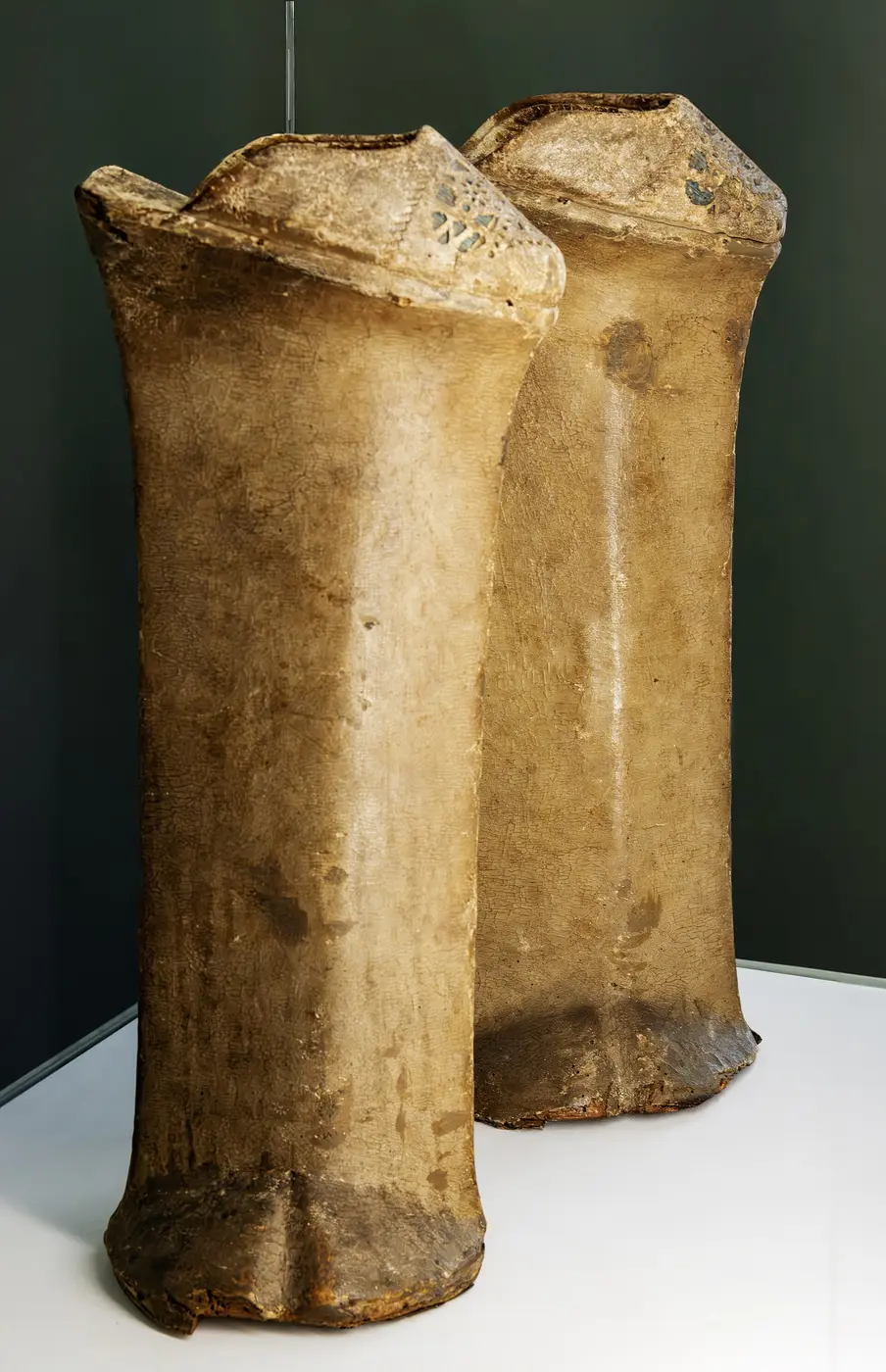
Platform shoes history is the story of a practical idea that vanity hijacks again and again. It started as a way to keep your feet out of mud, water or fish guts, and every few centuries somebody rediscovers that it also makes you taller than everyone else. From there, the soles climb until someone falls, fashion panics, the platform vanishes and, a few decades later, it comes back as if no one remembered. It happened in Venice, in Japan, in Qing dynasty China, in 1970s New York and London, and on a Paris runway in 1993.
Unlike the high heel, which lifts only the heel and started out as a man’s riding shoe, as we explained in men in high heels, a platform raises the whole foot. That difference explains almost everything that follows.
A fix for the mud
Before it was fashion, the thick sole was a tool. According to Wikipedia, people in medieval Europe wore pattens, overshoes strapped on over everyday shoes, with wooden soles sometimes raised on wedges or iron stands, to keep leather footwear out of water, snow and mud. Men and women both wore them, especially in the 15th century, when the absurdly long-toed shoes we covered in our piece on poulaines were in fashion, and in London they were usually made of alder, willow or poplar. Women kept wearing them in muddy conditions into the 19th century and even the early 20th.
The same logic turned up in places with no contact with one another. In Japan, according to the same source, some fish merchants wore geta, traditional wooden sandals, with especially long teeth to keep their feet above the scraps on the shop floor. And in the bathhouses of the Ottoman world and the eastern Mediterranean, people walked on wet hammam floors in high wooden clogs, the same logic that much later put clogs in kitchens and operating rooms. English Wikipedia mentions the kabkabs worn by Lebanese women between the 14th and 17th centuries, named for the clatter they made on marble, with straps of velvet, leather or silk and wooden stilts trimmed in silver or pearl.
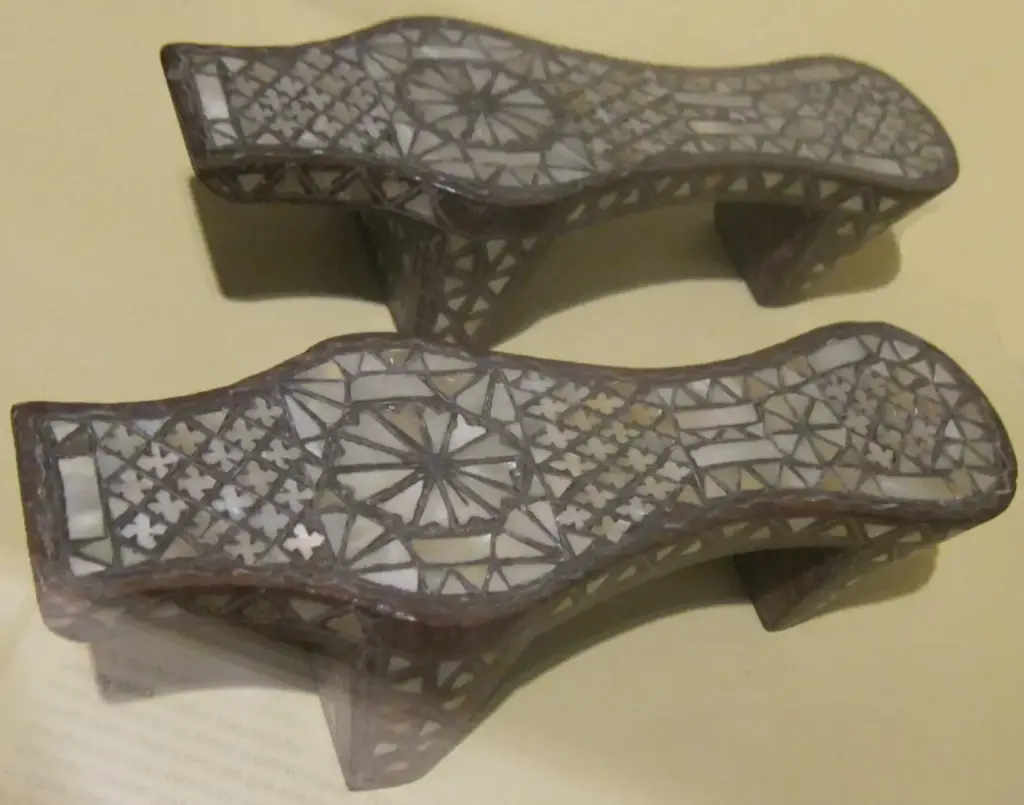
Once a practical object gets inlaid with mother-of-pearl and silver, it isn’t only practical anymore. The platform has always lived that double life.
Venice and chopines half a yard high
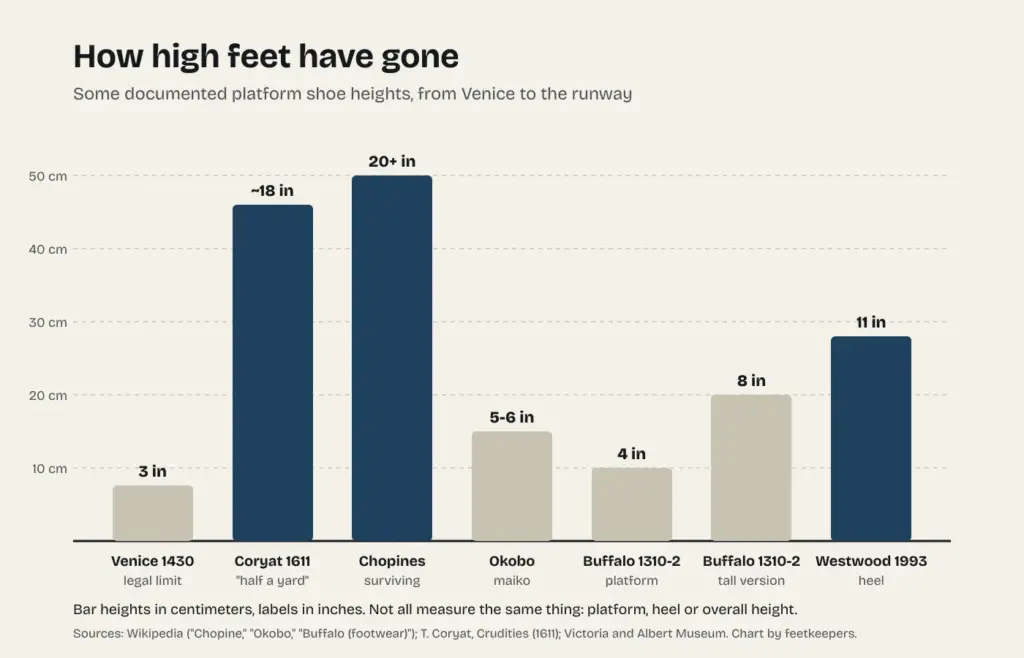
History’s most extreme example came out of a city built on water. In Venice, according to Wikipedia, both courtesans and patrician women wore chopines from roughly 1400 to 1700, and height became a marker of social standing: the taller the shoe, the more important the wearer. Some surviving examples are more than 20 inches tall, and the tallest known pairs are in the Museo Correr in Venice.
The Republic tried to rein it in. According to the same source, a 1430 law capped chopines at three inches, and it was widely ignored.
The best eyewitness is an English traveler with very little patience. Thomas Coryat published an account of his European journey in 1611, Coryat’s Crudities, and his notes on Venice spend a full paragraph on what he called “Chapineys.” He wrote that no Venetian woman went without them, at home or out; that they were wood covered in white, red or yellow leather, many painted and some gilded; and that some were as much as half a yard high, which made short women look taller than the tallest women in England. He’d also heard that the nobler the woman, the higher her chopines. Ladies went out leaning on the arm of a servant so they wouldn’t fall. Coryat watched one woman, walking alone, take a very dangerous fall going down the steps of one of the little stone bridges, and he wrote without a trace of embarrassment that he didn’t pity her at all, because she wore such frivolous and ridiculous instruments. He and other foreigners, he added, often laughed at them.
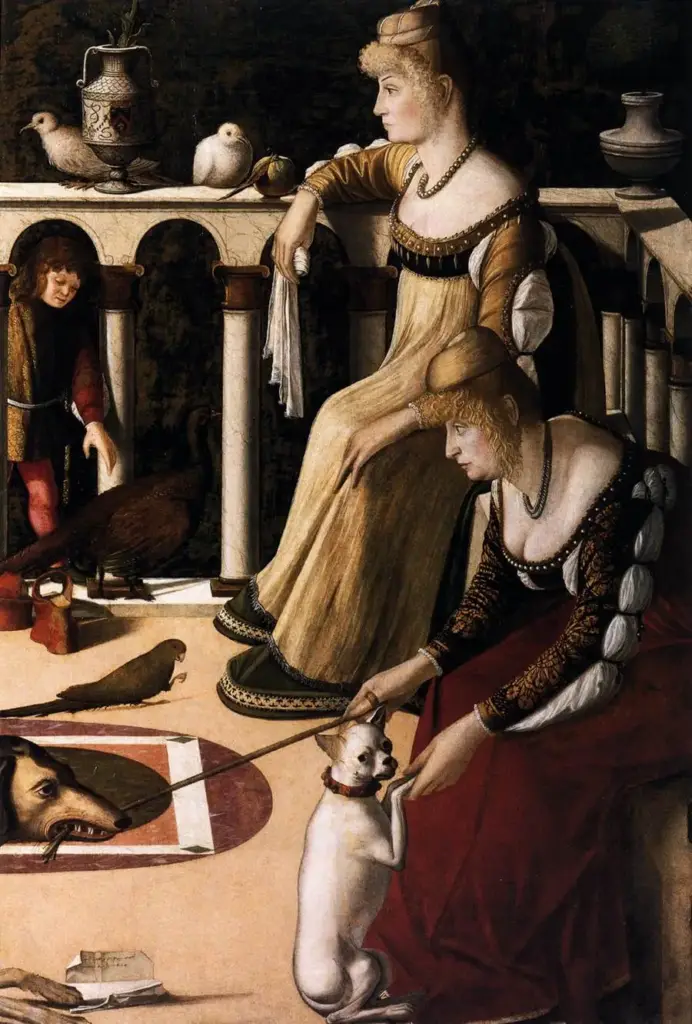
Around 1490, Vittore Carpaccio painted Two Venetian Ladies, now in the Museo Correr. On the floor at the left sits a pair of red chopines. According to Wikipedia, starting in the 19th century, those chopines and the women’s apparent idleness were taken as signs that they were courtesans. Art historians today think they were more likely members of the patrician Torella family, whose crest appears on the vase on the parapet. The painting is also proof that a platform shoe could be read in two opposite ways in the same city.
Shakespeare got a laugh out of them, too. In Hamlet, the prince greets the boy who played the women’s parts in a traveling company and tells him he’s grown nearer to heaven since they last met, by the altitude of a chopine. Women didn’t act on the English stage then, and the joke worked because everyone in the audience knew exactly which shoe he meant.
Could anyone actually walk in them? According to Wikipedia, some scholars think chopines forced an unstable, ungainly gait, while others argue that with practice a woman could walk and even dance gracefully. Dancing master Fabritio Caroso took the second view in Nobiltà di dame, his 1600 manual, writing that a lady used to her chopines could move with grace and beauty and even dance galliard variations.
Platforms in Asia
In Qing dynasty China, Manchu women wore very tall platform shoes from the start of the dynasty to its end. According to Wikipedia, they had fabric uppers and a wooden platform set under the middle of the foot, and they were classified by the shape of that block: the flowerpot shoe, huapenxie, wide at top and bottom and narrow in the middle, and the horse-hoof shoe, matixie. Left and right were interchangeable. The Manchu barred their women from binding their feet the way Han Chinese women did, and it’s sometimes said the platform imitated the gait of bound feet, though the same source notes that explanation is disputed. The legends it records are more colorful: a goddess who wanted to stay clear of mud and insects, or a princess who had her soldiers cross a marsh on wooden stilts to retake their capital.

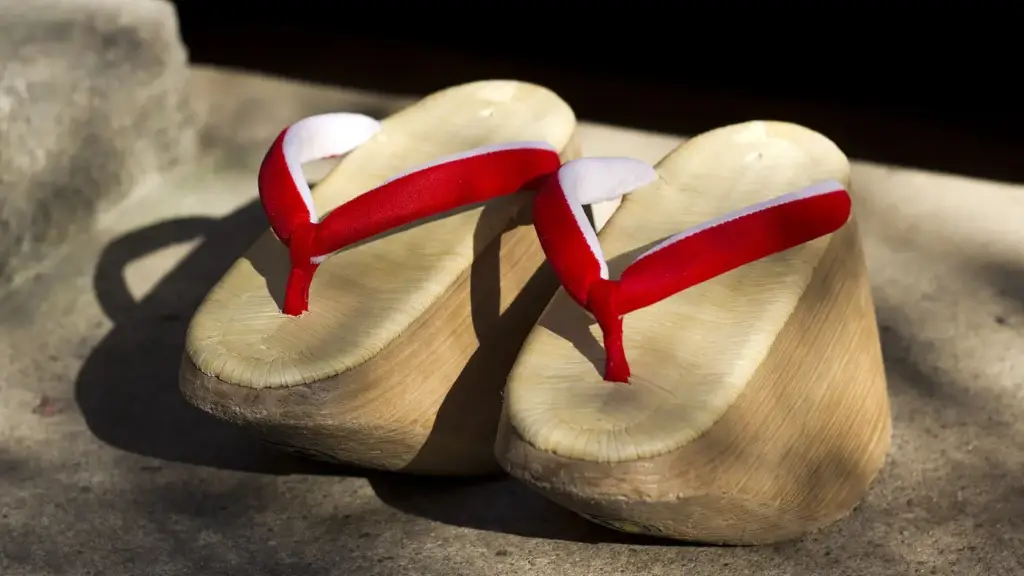
In Japan, the high-ranking courtesans of the feudal era, the oiran, wore tall lacquered geta, some with three legs, in their processions, and according to Wikipedia that footwear also set them apart at a glance from geisha and their apprentices. Apprentice geisha, maiko, still wear okobo in some regions: one-piece sandals of paulownia wood that, in their case, stand 5 to 6 inches tall. The name imitates the sound they make, and the color of the strap shows how far along the apprentice is: red at the start, yellow at the end.
Hollywood, the war and Ferragamo’s Rainbow
The modern platform reached the West in the 1930s. According to Wikipedia, in the early part of the decade, shoemaker Moshe Kimel designed an early modern version for Marlene Dietrich; he later fled Berlin and opened the Kimel shoe factory in Los Angeles in 1939. By 1936, Salvatore Ferragamo was making platforms in many heights, some paved in shiny gold metallic tiles, and in 1938 he created the Rainbow, a platform sandal for Judy Garland, its wedge built from layers of cork covered in colored suede, with gold kidskin straps. We covered his famous cork wedge in comfortable high heels; the Rainbow was the showstopper version of the same idea. According to Wikipedia, Life magazine estimated in 1939 that platforms made up 15 percent of footwear being sold, and American Vogue found some of them clumsy but encouraged them for streetwear because they were comfortable and practical.
The war did the rest. With leather rationed, soles were made of cork, wood or plastic, and the tighter the restrictions, as in Britain, the lower and rarer the platforms. Occupied Paris went the other way: according to Wikipedia, Frenchwomen wore very tall, elaborate platforms as an act of defiance, and celebratory platforms were made when the city was liberated in 1944. Some designers even worked on glow-in-the-dark platforms for blackouts.
Then Christian Dior’s 1947 collection pushed a silhouette without high platforms, and the slender heel ruled the 1950s. According to the same source, some cobblers offered platform-removal services.
The 1970s: when men climbed back up
The big wave started in 1967, when Roger Vivier made platform sandals and boots for Yves Saint Laurent, and it exploded in the early 1970s. By 1970, platforms were showing up in Seventeen magazine. What set this wave apart from every earlier one was that ordinary men got on board. According to Wikipedia, men’s platforms made up as much as a fifth of men’s shoes sold in the early ’70s, in loud colors with chunky heels that balanced out bell-bottoms. Kiss, Slade, Parliament, the New York Dolls and the Bay City Rollers wore them on stage, and so did ABBA, Stevie Nicks and Suzi Quatro. David Bowie wore them as Ziggy Stardust. In 1972, at 219 Bowery in Manhattan, Carole Bascetta developed a special mold for custom platforms and sold them to Bowie and to David Johansen of the New York Dolls. The best-selling style of the era, according to the same source, was much plainer: a simple sandal with tan straps on a suede-covered cork wedge, first sold as Kork-Ease and copied endlessly.
The cost of all that height made the papers, too. According to Wikipedia, the stiff soles and great heights led to numerous falls and injuries, and newspaper articles occasionally quoted podiatrists and consumer advocates warning about the shoes. Platform boots were a little safer, because the shaft held the ankle in place and kept the foot from sliding off the sole. In Europe and Britain the trend died abruptly in 1976; in the U.S. it hung on until the early 1980s. Then came the backlash. Punk sneered at platforms, and in 1983 Kiss dropped its makeup and its platform boots, not to bring them back until the ’90s revival.
Naomi Campbell, Japan and the Spice Girls
In the 1990s the platform came back by way of runways and pop, and it came back with famous falls. According to Wikipedia, one of the first recorded catwalk falls blamed on platforms was Dianne Brill’s at a 1988 Jean Paul Gaultier show. The most famous came in 1993. Vivienne Westwood showed her Fall/Winter Anglomania collection in Paris, and Naomi Campbell went down mid-runway in a pair of Super Elevated Gillies in blue mock-croc leather. According to the Victoria and Albert Museum in London, which acquired and displayed them that same year, the heels are 28 centimeters, about 11 inches, and the model’s name is handwritten on the insole. Campbell has said the rubber tights she wore were partly to blame. When she walked in nearly the same outfit again, the tights were gone and she’d been handed a walking stick.
Around the same time, platforms became a youth phenomenon in Japan. Asiaweek reported in 2000 that pop star Namie Amuro had brought them back about five years earlier, and that a survey had found 40 percent of Japanese women in their twenties owned at least one pair. The magazine blamed platform shoes for at least three deaths in Japan and said they were banned for drivers in Osaka. We couldn’t confirm those cases or that rule in official sources, so they stand as the magazine’s account. Asiaweek added another detail: on the floor of a Chicago exchange, shoes taller than 2 inches were frowned on, mostly affecting men who’d been trying to stand out in the trading crowd.
In Europe, the final push came from the Spice Girls. According to Wikipedia, the British group was often seen in towering platform sneakers and boots from the German brand Buffalo; the 1310-2 model, with a 4-inch platform, became famous thanks to them, and it also came with an 8-inch one. Asiaweek reported in 2000 that Emma Bunton, Baby Spice, had fallen off hers and hurt an ankle, an arm and her nose. Between 2018 and 2022, riding ’90s nostalgia, Buffalo reissued versions of its platforms from that era.
Why it always comes back
Six hundred years of platforms leave a pretty clear pattern. The platform shows up when people need distance from the ground, whether it’s mud, water or fish scraps, and it sticks around when it puts distance between one person and everyone else: the Venetian noblewoman and the commoner, the oiran and the geisha, the rock star and the crowd, the ’90s girl and the guy next to her. In between, the same characters always appear: the lawmaker who sets a limit, the traveler who laughs, the doctor who warns, and the fall that ends up in the papers.
The physics doesn’t change either. A platform doesn’t tilt the foot if it rises equally front and back, which is why it’s been used so often to gain height without the slope of a heel. But the higher it goes, the farther the foot sits from the ground and the stiffer the sole becomes. No Venetian lawmaker, no 1970s podiatrist and no runway fall has managed to make the world forget it. Every generation rediscovers the platform, and every generation thinks it was the first to climb up.
Sources
- T. Coryat (1611), Coryat’s Crudities, “Observations of Venice,” 1905 Glasgow reprint, vol. 1, pp. 399-400.
- Victoria and Albert Museum, “‘Super Elevated Gillie,'” Vivienne Westwood, 1993, museum number T.225:1, 2-1993.
- Asiaweek (2000), “What’s Afoot?”, in “Asia’s Best 2000,” Internet Archive copy.
- W. Shakespeare, Hamlet, Act II, Scene 2.
- Wikipedia: Platform shoe, Chopine, Patten (shoe)), Geta (footwear)), Okobo, Manchu platform shoes, Two Venetian Ladies and Buffalo (footwear)).
Image credits
- Chopines at the Museo Correr, Venice: Didier Descouens. Public domain, via Wikimedia Commons.
- 18th-century Syrian bath clogs, Honolulu Museum of Art: Hiart. Public domain (CC0), via Wikimedia Commons.
- Two Venetian Ladies (around 1490), Vittore Carpaccio, Museo Correr. Public domain, via Wikimedia Commons.
- 19th-century Manchu shoes, Bata Shoe Museum: Daderot. Public domain (CC0), via Wikimedia Commons.
- Okobo: Japanexperterna.se. CC BY-SA 3.0, via Wikimedia Commons.
- Height chart: feetkeepers.