
Vegan shoes materials are sold on a single word that describes what’s missing, and that’s exactly the problem. “Vegan” promises no animal hide, no animal glue, no wool. It tells you nothing about what’s there instead. And what’s there, when a lab puts the samples under a microscope, is mostly plastic: polyurethane, polyester, sometimes PVC, with a little cactus or grape or apple stirred in like seasoning. That doesn’t make vegan shoes a scam. It makes them a category you have to read closely, because the same label covers materials that have almost nothing in common.
The label describes an absence
Leather is tanned animal skin. “Vegan” only tells you that skin isn’t in the shoe. The gap can be filled by anything that can pass for leather: a plastic-coated fabric, a felt of plant fibers, a sheet of lab-grown fungus, or some combination. When a brand calls a shoe vegan, it’s making a claim about where the materials came from. It isn’t making a claim about the chemistry, how long the shoe will last or what it costs the planet. Those are three separate questions, and the label answers one.
The second misunderstanding is worth clearing up early: vegan doesn’t mean natural. A plain vinyl shoe from a discount store is perfectly vegan. It was vegan decades before the word showed up in shoe marketing, back when Americans called it pleather or leatherette. What’s new in the past decade isn’t the animal-free shoe, which has been on store shelves for a century. It’s the promise that the substitute grew on a plant.
America has been faking leather for more than 100 years
The fake-leather business in the United States grew out of gunpowder chemistry. In 1910, DuPont bought the Fabrikoid Company of Newburgh, New York. According to Wikipedia, Fabrikoid was cotton cloth coated with pyroxylin, a less heavily nitrated cousin of the nitrocellulose used in explosives, dissolved in castor oil, alcohol, benzene and amyl acetate. By the 1920s, it was covering car seats and convertible tops.
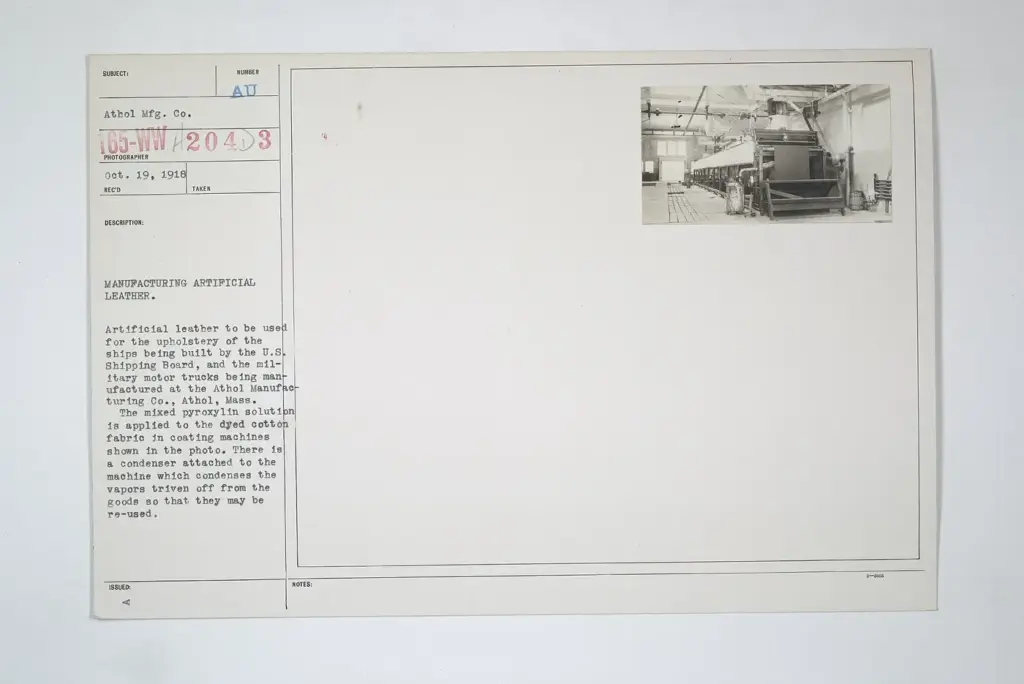
A set of photo cards in the National Archives shows what that industry looked like at full tilt. On October 19, 1918, a government photographer documented the Athol Manufacturing Company in Athol, Massachusetts, which was making artificial leather for the upholstery of ships being built by the U.S. Shipping Board and for military trucks. The captions walk through the process: cotton treated with nitric and sulfuric acid in “nitrating centrifugals,” the excess acid washed out in wooden tubs, the cotton dissolved in solvents like amyl acetate and benzol, and the finished pyroxylin solution spread onto dyed cotton fabric in coating machines, with condensers recovering the solvent vapor for reuse.
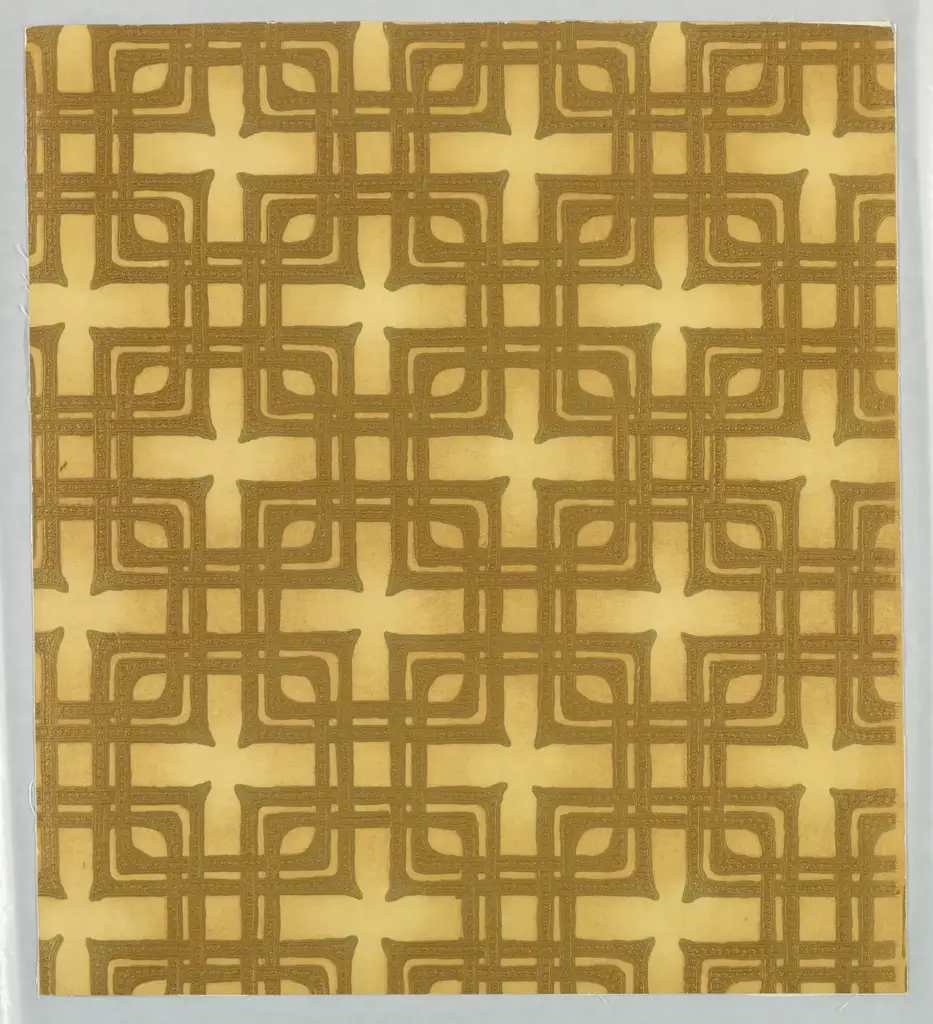
Plastic took over in the 1930s. Naugahyde, first trademarked in 1936 and named after Naugatuck, Connecticut, where the U.S. Rubber Company first made it, is a knit fabric backing with an expanded PVC coating. In the 1960s and ’70s, its ad campaign invented an animal to explain it: the Nauga, a squat, horned creature that supposedly shed its skin without harm. The joke took on a life of its own as an urban legend, and the Nauga doll was still on sale in 2023. Half a century before anyone said “vegan leather,” a marketing department was already selling fake leather on the promise that no animal had died for it.
The most ambitious attempt to put the stuff on feet was DuPont’s Corfam, introduced at the Chicago Shoe Show in 1963. It was the first “poromeric,” a word DuPont built from porous and polymeric: a polyurethane coating on a polyester fiber base, engineered to breathe like leather. It was the centerpiece of DuPont’s pavilion at the 1964 New York World’s Fair. In 1971, after spending millions marketing it to shoe manufacturers, DuPont pulled it and sold the rights to a company in Poland. The basic recipe outlived the brand, though. Polyurethane on fabric is the backbone of a large share of the vegan shoes sold today.
Cactus, grape and apple: open the sandwich
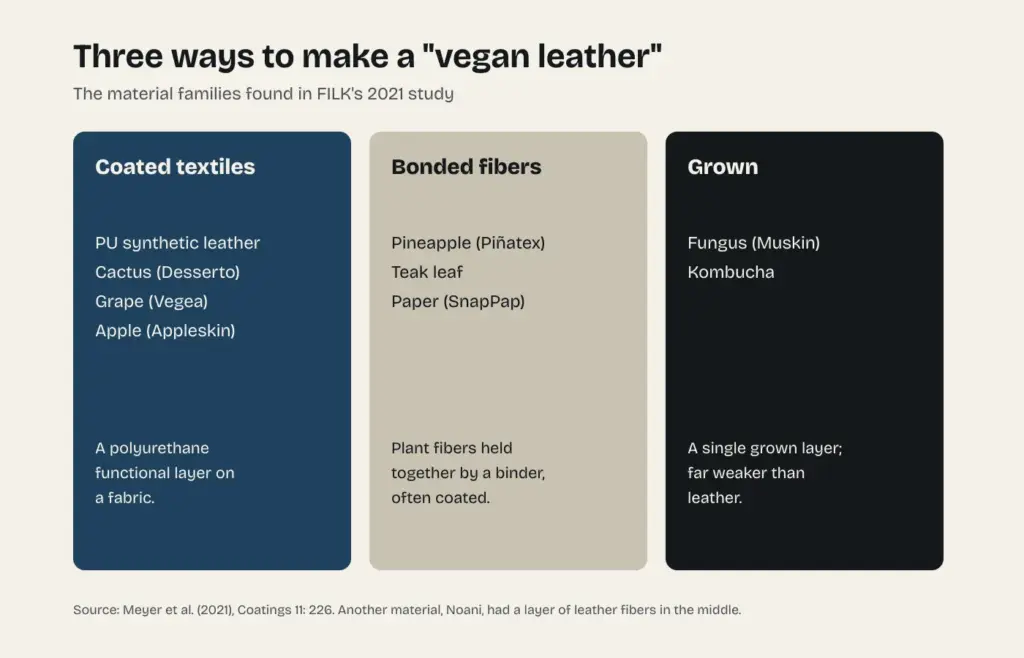
The most detailed published teardown of these materials came out of the FILK research institute in Freiberg, Germany, in 2021. A team led by Michael Meyer compared, in the journal Coatings, a shoe upper leather, a reference artificial leather and nine alternatives sold as vegan leather: Desserto (cactus), Vegea (grape), Appleskin (apple), Piñatex (pineapple), Teak Leaf, SnapPap (paper), Muskin (fungus), a kombucha-based material and Noani. We covered the strength and breathability results in our piece on how leather is made. This time the question is simpler: what is each one made of?
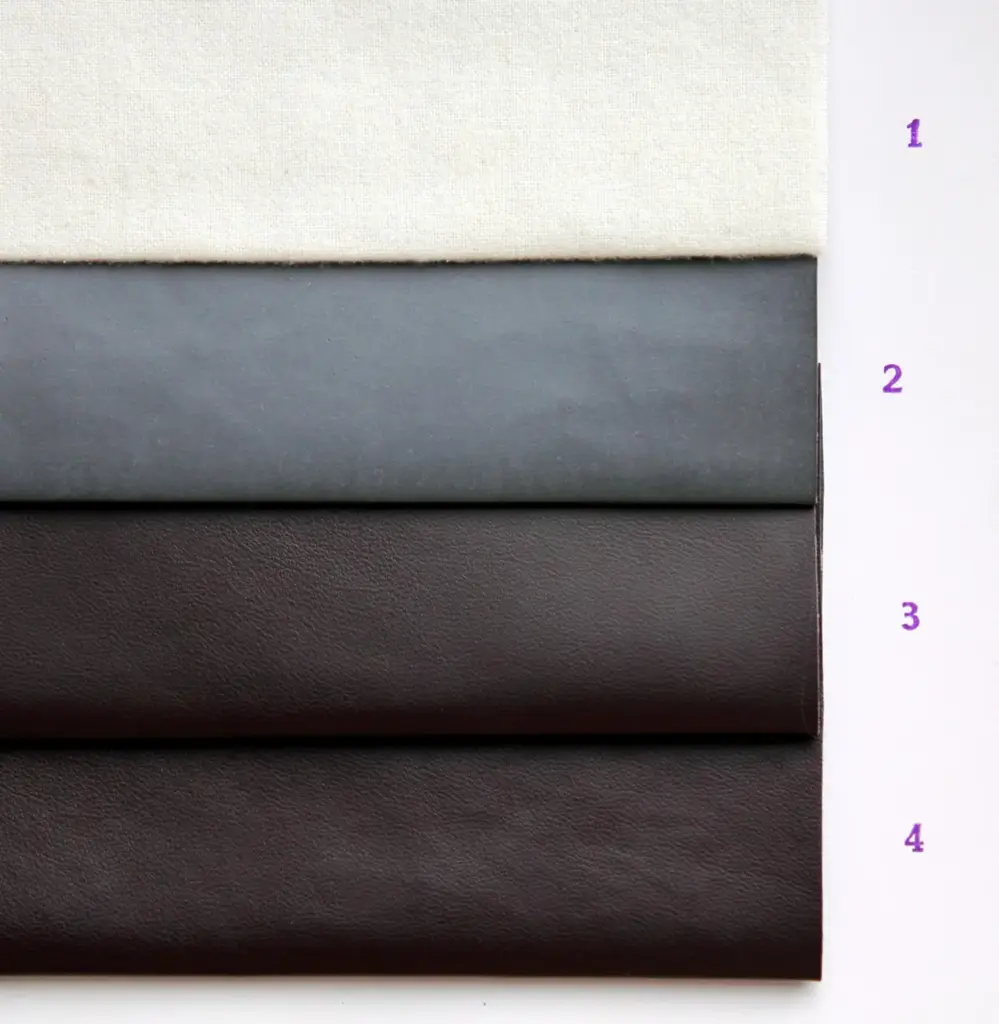
The cactus, grape and apple materials turned out to be built just like conventional synthetic leather. At the bottom, a woven or knitted polyester fabric, or cellulose in Vegea’s case. In the middle, a layer of foamed polyurethane, meaning it’s full of trapped gas bubbles that give it body and softness, with the plant powder mixed in as filler. On top, a polymer finish that supplies color, shine and grain. To identify each layer, the team used infrared spectroscopy, which fingerprints chemical compounds by the infrared light they absorb. The verdict was blunt: the functional layers of these coated fabrics are mainly polyurethane.
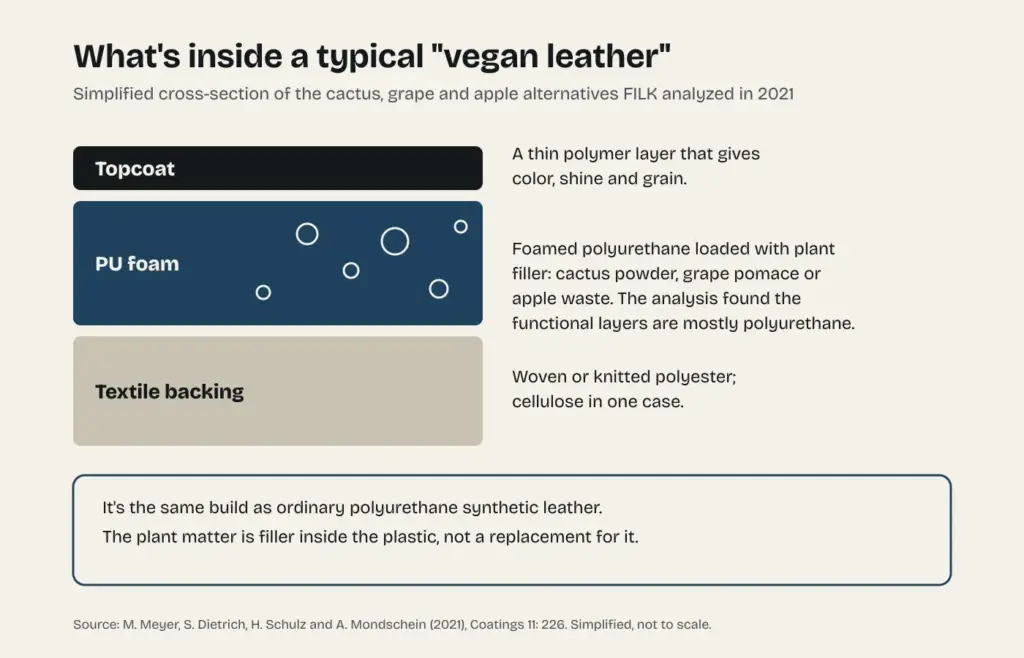
Put plainly, in a “cactus leather” shoe, the cactus is inside the plastic, not instead of it. That can cut the amount of fossil-based polyurethane per square yard, which is a real improvement if the share is high. But the study didn’t measure the share, and brands don’t always publish it. Without that number, “made with cactus” can mean almost anything.
The practical consequences are the same as with ordinary synthetics, too. Polyurethane ages through hydrolysis, the reaction in which water breaks its chemical bonds, which we explained in how long sneakers last. And a coated material doesn’t give and mold to the foot the way hide does, as we laid out in how to stretch shoes: its stretch snaps back instead of setting into the shape of your foot.
Pineapple, teak and paper: fibers stuck together
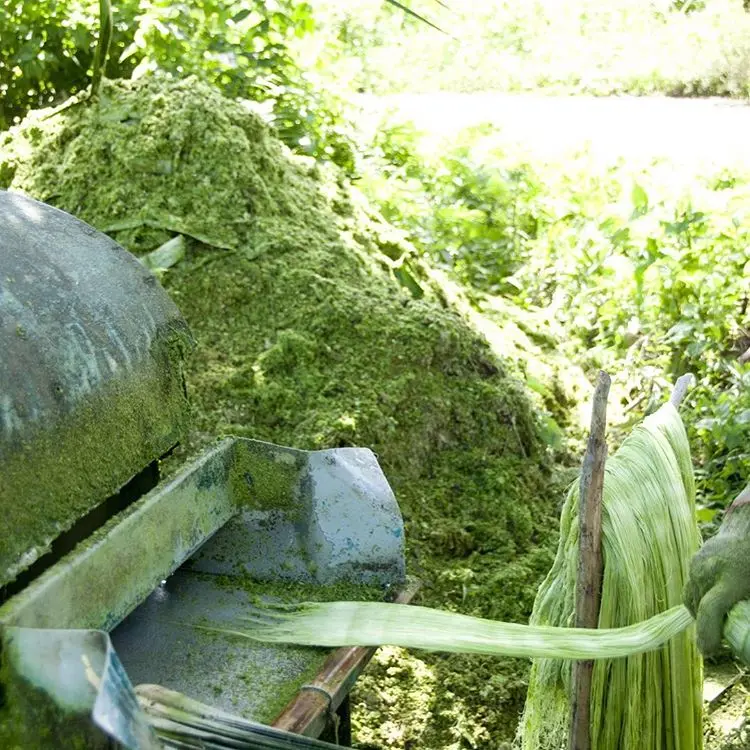
The second family FILK identified isn’t a coated fabric. It’s a nonwoven: loose fibers bonded by pressure, heat or a binder, more like felt than cloth. That’s the idea behind Piñatex, the pineapple-leaf material developed by Carmen Hijosa after she worked as a leather-goods consultant in the Philippines in the 1990s. According to Wikipedia, she took inspiration from the barong tagalog, a traditional Filipino garment woven from pineapple fiber, and spent seven years developing the material through a PhD at the Royal College of Art in London.
Wikipedia gives the recipe as a felt of 80 percent pineapple-leaf fiber and 20 percent PLA, polylactic acid, a plant-derived plastic usually made from corn starch, finished with a petroleum-based resin. One square meter, a little under 11 square feet, takes about 480 leaves, the waste from 16 plants. Those leaves are a byproduct of pineapple farming that usually gets left to rot or burned. Because of the blend, the finished material isn’t biodegradable. The pineapple fiber is real, and it puts a waste stream to work, but the product still carries plastic.
The study’s other two nonwovens show where the concept runs out. Teak Leaf had a cellulose core with an acrylic binder, a polyester backing and a polyolefin film, another plastic family. SnapPap was cellulose fiber with an acrylic binder, essentially a very tough paper, and its tear resistance was low. In the flex test, which bends a sample tens of thousands of times the way a shoe bends with every step, Teak Leaf and SnapPap failed. Leather, Piñatex and the polyurethane fabric passed.
Leather grown in a lab, and a company that didn’t make it
The third family looks best on paper and worst on the test bench: materials that aren’t manufactured so much as grown. Muskin comes from a fungus, Phellinus ellipsoideus. Its structure is a web of hyphae, the threads that make up a fungus’s body, and the infrared analysis showed mostly polysaccharides, so the authors concluded the hyphae are made of chitin, the same molecule found in insect shells. The kombucha material comes from the fermented tea: the bacteria that ferment it secrete a cellulose that forms a gel-like mat, which is then dried.
Both were tested as shoe upper material and both fell well short. According to the FILK team, animal skin is 100 to 1,000 times stronger in tension and tear than these microbe-made materials. They put it down to architecture. Leather’s collagen forms interwoven fibers locked together by tanning, with a very tight top layer. In Muskin, the fibers grow perpendicular to the surface, exactly the direction that resists a pull the least. The authors suggested that aligning the fibers with the load might help, and that’s precisely what the mycelium industry set out to sell.
Its best-known bet went bust. MycoWorks, founded in California in 2013, made a mycelium material called Reishi using a patented process meant to steer how the fungal cells grow. In 2022, a life cycle assessment, which adds up a product’s environmental impact from raw materials to the factory gate, appeared in Environmental Sciences Europe. It put Reishi’s carbon footprint as low as 2.76 kilograms of CO₂ equivalent per square meter, 8 percent of the bovine leather benchmark it modeled. In 2023, the journal ran a correction: two of the authors worked for MycoWorks, which had funded the study, and that hadn’t been disclosed. According to Wikipedia, the company’s South Carolina factory, opened in October 2023, ran at 22 percent of capacity and shut down in October 2025, the same month the company became insolvent. A material can look beautiful in a spreadsheet and still not find buyers.
The vegan material with leather in the middle
The most awkward finding in the FILK study was Noani. It turned out to have three layers: an embossed microfiber on top, a PU and PVC coated fabric on the back like any artificial leather, and in the middle, leather board, which is leather ground into fibers and bonded back together. The authors called the find surprising, because the product was sold as vegan and had “PETA approved” embossed right into the material. There’s no way a shopper would catch it. Neither the feel nor the look gives away what’s in the middle layer.
In the U.S., that combination brushes up against federal guidance. The Federal Trade Commission’s Guides for Select Leather and Imitation Leather Products, which explicitly cover footwear, say material made from ground, shredded or bonded leather shouldn’t be represented as leather. They also say a backing that isn’t apparent on casual inspection should be disclosed. The guides were written to keep fake leather from posing as the real thing. A product hiding real leather inside a vegan label is the mirror image of the problem they were built for.
What the chemistry turned up
FILK also heated the samples to see what volatile compounds they gave off and checked the results against restricted substance lists, the chemicals that regulations or industry standards limit or ban in consumer goods. Every sample released volatile organic compounds. Five contained restricted substances. The reference polyurethane fabric held considerable amounts of dimethylformamide, a solvent widely used to make polyurethane, and toluene, another solvent. Appleskin showed butanone oxime, a common paint additive, plus traces of dimethylformamide. Desserto had five: butanone oxime, toluene, free isocyanate (leftover polyurethane building block that never finished reacting), folpet, a pesticide, and traces of a plasticizer called diisobutyl phthalate. Vegea showed toluene. Piñatex showed that same phthalate.
None of that says any particular shoe is dangerous. It’s a lab screening of material samples, not finished shoes and not what reaches your skin. What it does say is that a plant-based ingredient in one layer doesn’t clean up the chemistry of the rest. A polyurethane’s solvents and additives are still a polyurethane’s, apple powder or not.
The environmental math nobody has finished
The question everyone asks, whether a vegan shoe is greener than a leather one, doesn’t have a clean answer, and anyone offering a round number deserves some suspicion. We couldn’t find a peer-reviewed study comparing shoe polyurethane and cowhide per square meter using independent data and matching methods. What exists are company-commissioned analyses whose assumptions swing the outcome: how much of cattle ranching’s footprint gets charged to the hide, which is a byproduct of beef; how long each material lasts; and what happens to it at the end.
The tool most widely used for those comparisons, the Sustainable Apparel Coalition’s Higg Materials Sustainability Index, ran into trouble in Norway. In June 2022, according to trade press reports, the Norwegian Consumer Authority concluded that outdoor brand Norrøna had misled shoppers by marketing organic cotton T-shirts with Higg data, and warned H&M that such claims would easily be misleading and therefore prohibited. The reasoning: the index gives a material’s average impact, which isn’t necessarily the impact of the specific product being advertised, and some of its underlying data were out of date. The coalition said it would review the index.
Then there’s the end of the line. The MycoWorks assessment itself noted that most alternatives contain enough plastic to keep them from biodegrading. Leather doesn’t vanish in a backyard compost pile either, but it’s a protein. A sandwich of polyurethane and polyester is something else. A shoe that wears out fast and lands in a landfill can come out worse than a pricier one that lasts for years, whatever it’s made of, a tradeoff we dug into in expensive vs. cheap shoes.
What the label tells you, and what it doesn’t
In the U.S., the FTC’s guidance pushes sellers to say plainly when something isn’t leather. Its examples of acceptable wording are refreshingly unglamorous: “Not leather,” “Imitation leather,” “Simulated leather,” “Vinyl,” “Vinyl coated fabric” and “Plastic.” The same guides warn against trade names, logos or hide-shaped tags that suggest animal leather when there isn’t any. “Vegan leather” doesn’t appear on that list, and whether it counts as an adequate disclosure is something the guides don’t spell out.
Europe went further on the words themselves. The FILK paper notes that the European standard EN 15987 on leather terminology restricts the use of terms like synthetic or artificial leather. Italy passed Legislative Decree 68 of June 9, 2020, reserving “cuoio,” “pelle” and “pelliccia” for animal materials, with fines from €3,000 to €20,000. The twist: it excludes products already covered by EU Directive 94/11/EC, which is the footwear labeling directive. For shoes, the EU rule does the work, with its four pictograms for leather, coated leather, textile and “other materials.” Vegan shoes usually land in the last two, and the pictogram won’t tell you whether “other” means PVC, polyurethane or polyurethane with cactus in it.
How to read a vegan shoe without buying the brochure
With all that in hand, a vegan shoe makes more sense if you ask it three questions instead of one. First, which family is it: a polyurethane-coated fabric, a bonded fiber or something grown? Second, how much of it is plant-based, and in which layer, because a cellulose backing is a very different thing from 10 percent powder in the foam. Third, what’s the sole made of, because the upper can be apple and the sole can be synthetic rubber or one of the foams we explained in EVA vs. TPU vs. PEBA.
If the brand answers all three, you know more than the word vegan ever told you. If it answers none, the shoe may still be perfectly good, but what’s on sale is an absence. Fake leather has spent more than a century promising that this time it really beats hide. Some of the materials have come a long way. None of the ones tested by an independent lab yet combines leather’s strength, flex resistance and breathability in a single material, and none has shown with independent data that its footprint is smaller.
Sources
- M. Meyer, S. Dietrich, H. Schulz and A. Mondschein (2021), “Comparison of the Technical Performance of Leather, Artificial Leather, and Trendy Alternatives,” Coatings 11(2): 226.
- C. Williams et al. (2022), “Life cycle assessment of MycoWorks’ Reishi™: the first low-carbon and biodegradable alternative leather,” Environmental Sciences Europe 34: 120; correction in Environmental Sciences Europe 35: 38 (2023) on the undisclosed conflict of interest.
- U.S. National Archives, “Industries of War – Leather Subs – Manufacturing artificial leather,” Athol Manufacturing Co., October 19, 1918.
- Federal Trade Commission, Guides for Select Leather and Imitation Leather Products, 16 CFR Part 24 (scope in § 24.0).
- Wikipedia: Artificial leather (Corfam), Fabrikoid, Naugahyde, Piñatex and MycoWorks.
- The Business of Fashion (2022), “H&M, Norrøna under fire in Norway over environmental marketing”, on the Norwegian Consumer Authority’s position on the Higg index.
- Italian Legislative Decree No. 68 of June 9, 2020, Gazzetta Ufficiale General Series No. 160, June 26, 2020, summary from the Bologna Chamber of Commerce.
- Directive 94/11/EC of the European Parliament and of the Council, on the labeling of the materials used in the main components of footwear.
Image credits
- Stripping pineapple leaves for fiber: Piñatex. CC BY-SA 4.0, via Wikimedia Commons.
- Athol Manufacturing Company photo card, 1918: U.S. National Archives (NARA). Public domain, via Wikimedia Commons.
- 1920 imitation leather: Cooper Hewitt, Smithsonian Design Museum. Public domain, via Wikimedia Commons.
- Steps in making polyurethane synthetic leather: Holger Casselmann. CC BY-SA 3.0, via Wikimedia Commons.
- Layer and material-family diagrams: feetkeepers.